Envision said on Monday that live computing workloads at its Galaxy AI campus in Ulanqab, Inner Mongolia, are running on an integrated 800-volt direct-current power system. The company calls it the first commercial deployment of its kind at scale.
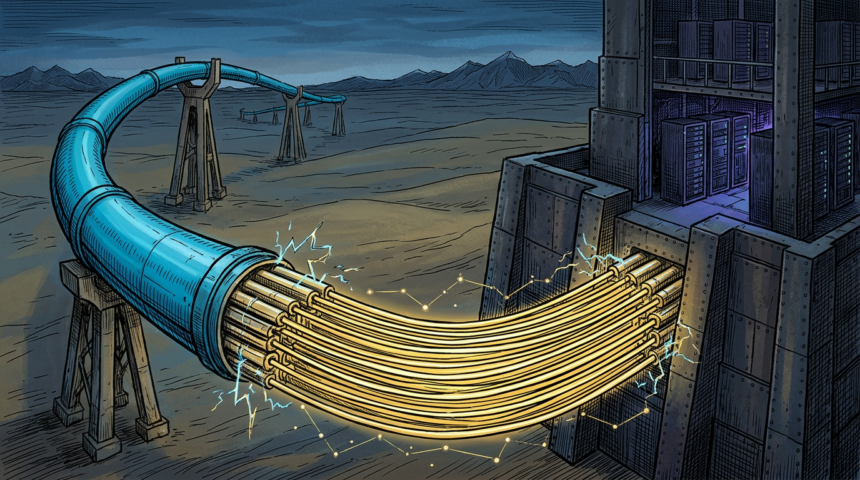
The chain runs from a 10-kilovolt medium-voltage input through solid-state transformers to an 800V bus at the rack. Battery storage sits between them, and a controller the company calls Dubhe adjusts transformers and batteries in real time so supply tracks compute demand.
Why the voltage keeps climbing
Power per rack has risen far enough that alternating-current distribution, with its repeated conversion stages, wastes an increasing share of the electricity and consumes floor space that operators would rather give to accelerators.
Envision claims the direct-current design delivers higher conversion efficiency, a smaller equipment footprint and less copper. Those are the same arguments Nvidia and its partners have made for their own 800-volt plans, which are still being standardised.
The campus behind the claim
Galaxy opened in August with a 120,000 sq m facility. The build-out ceiling the company now quotes is 3GW, enough for roughly a million accelerators running at once, with more than 80 percent of the electricity coming directly from renewables.
This sits inside Mission Gobi, a plan announced in June to reach 5GW of green desert data centre capacity worldwide by 2030.
The engineering argument is narrower than the ambition. One live system in Inner Mongolia does not settle whether 800-volt direct current becomes the industry default, and Envision is selling both the power equipment and the vision.