

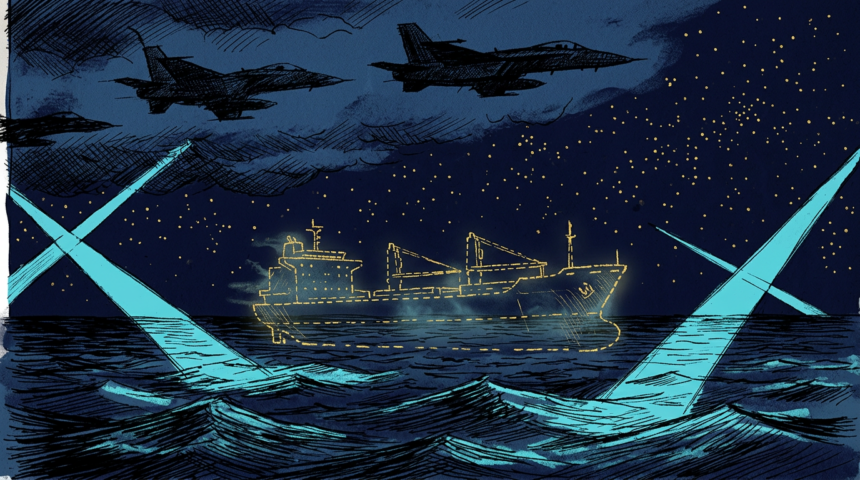
Two prompts to a chatbot, a misread cargo manifest, and an armed operation aimed at a Chinese vessel that had to be stopped at the last minute.
That sequence comes from a CNN report published on September 18. Military aircraft were already in the air when officials determined the intelligence behind the mission was invented, and the operation was aborted before it could trigger a confrontation with China.
The finding described a ship carrying parts for a nuclear weapons program. It began with an analyst at Special Operations Command who wanted open source reporting combined with classified signals intelligence. The chatbot got the cargo manifest wrong. A second pass, this time asking the same tool to format the result as an official summary, pushed the error into command channels where it traveled as fact.
Speed is why the military wants these systems. It is also why a fabrication can outrun review. The Pentagon has described AI as an advantage that shortens the kill chain so commanders can act inside the decision window.
Jake Steckler, a research scholar at GovAI and a former U.S. Army officer, told TechCrunch that service members need to grasp the uncertainty baked into language models. For targeting, intelligence analysis or operational planning, he said, mistakes carry life and death consequences.
His conclusion is not to slow adoption but to build better checks. The narrower question the case leaves open is where in the chain a human verifies the machine.