

Linking Personal Health and Climate Data
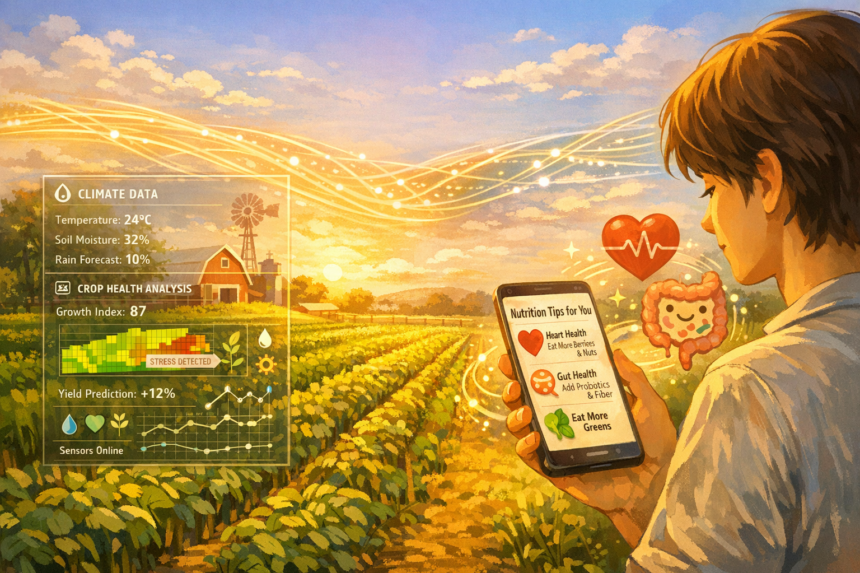
A new review published in npj Science of Food highlights how artificial intelligence could transform the global food system by connecting personal health metrics with environmental and logistical data. Researchers suggest that combining information from wearable devices, genetic profiles, gut microbiome analyses, and climate forecasts may enable more precise nutrition and farming decisions. For example, AI systems can analyze a person’s activity, heart rate, and sleep patterns alongside local food availability to recommend meals that are both healthy and environmentally sustainable. Early personalized interventions have shown promising results, including reductions in post-meal glucose levels of up to 21 percent in some studies.
Strengthening the Supply Chain and Raising Concerns
AI also offers tools to make food supply chains more efficient and climate resilient. Climate prediction models using satellite data can forecast floods and droughts weeks ahead. Singapore has deployed AI-controlled vertical farms that automatically adjust light, temperature, and nutrients, while robots handle planting and harvesting. The IBM Food Trust platform uses blockchain with AI-driven analytics to trace food from farm to store. AI-powered route optimization can cut greenhouse gas emissions by 15 to 30 percent.
However, significant hurdles remain, including inconsistent data formats, models trained mainly on populations in wealthy nations, lack of transparency in decision-making, and high costs for advanced indoor farming systems. Researchers advocate for federated learning approaches that protect individual privacy and provide clear explanations for AI-driven recommendations.