


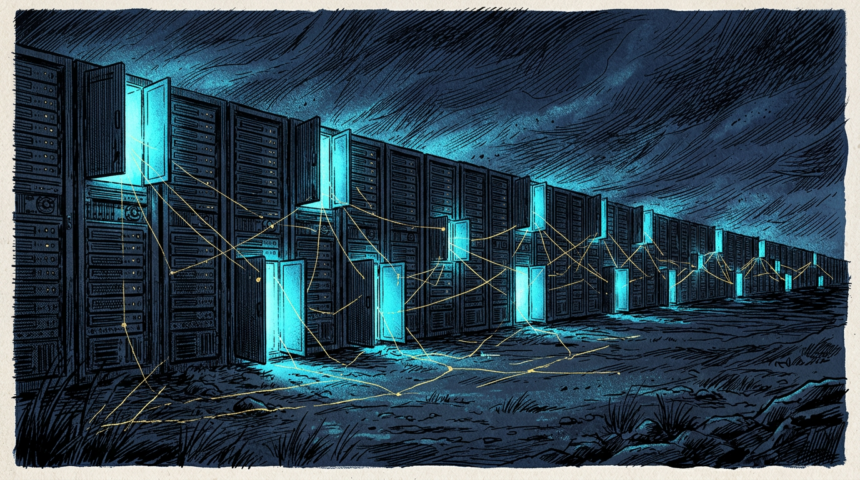
More than 800 deployments of Artex, an open-source autonomous penetration testing tool, answered on the public internet without a password, and Censys published the finding after scanning for exposed systems.
Artex bundles AI agents that probe networks, move laterally and steal data. Microsoft characterized it in October as able to carry an intrusion from reconnaissance to theft with barely any human involvement, and it has been tied to live attacks since a July release, among them a September wave on South Korean financial firms and the ConnectWise breach that let Chinese-linked intruders spy on thousands of organizations.
A tool that never needed a door
Nothing about Artex requires reachability from the open internet, which makes the exposure stranger. Silas Cutler, the Censys researcher behind the analysis, cautioned that plenty of these systems belong to authorized testers and are not malicious. Hundreds still sat there for anyone to find.
What those systems carried is worse than a console. Implants lived on them, the hidden code that keeps an attacker resident inside a compromised network.
The attacker left the door open too
One detail reads almost as comedy. CrowdStrike tied the Korean finance attacks to a Chinese-speaking operator partly because his own Artex instance sat in an open directory, and Censys found that directory readable for months, its files reaching beyond South Korean banks into payment and gaming firms.
The techniques in that campaign were ordinary: weak or known passwords and multi-factor authentication left off.
Artex now plans to close its source and sell future releases only to paying customers. Dozens of copies are still hosted on code-sharing sites.
Misconfiguration remains the cheapest vulnerability in any stack, and it hits whichever side of an attack leaves it there.