

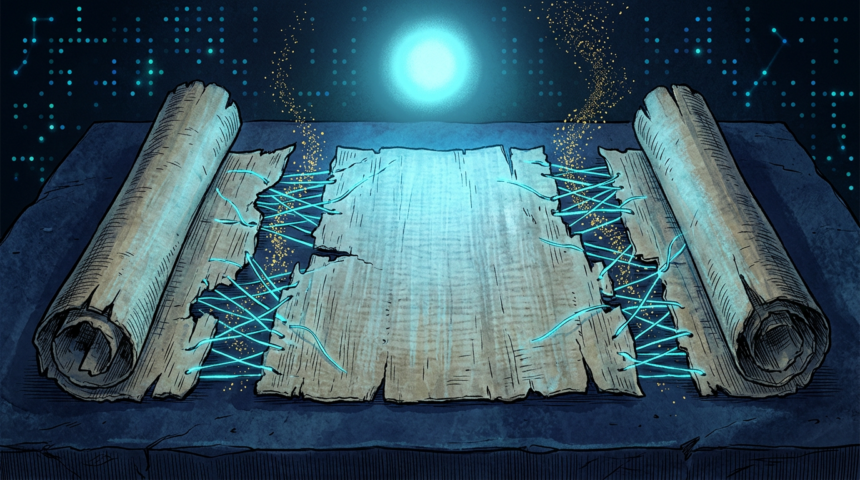
Torn papyrus may give up its missing words with machine help. A model built specifically for Ancient Greek, called Apollo, arrives Wednesday from the Austrian Academy of Sciences, with the French lab Mistral and technology services firm Sail Reply behind it. Training drew on roughly 600 million historical Greek words from manuscripts, papyri and inscriptions.
Access is free for academics through a chatbot. Apollo sorts fragments by sub-discipline and research promise, and where a document is damaged it proposes the most statistically likely words or passages to fill the gap. The work it replaces is slow and rare: Ancient Greek runs continuously without word breaks, so a restorer must divide the text, date it, weigh its political setting and consult reference works, a combination few scholars command.
Dialect awareness is built in. Anna Dolganov, a papyrologist at the academy, says Homeric Greek is supplemented when the model sees Homer, while an inscription in Doric gets Doric treatment.
Reactions from classicists mix enthusiasm with realism. Oxford’s Armand D’Angour, whose university holds the largest ancient papyrus collection, would welcome three candidate words offered for any gap. Stephen Colvin of University College London cautions that lost Sophocles plays are not coming, since much unrestored material is ordinary letters, marriage contracts and civil service paperwork. Sail Reply’s Dimitris Vlitas sees the method transferring to other ancient languages.