


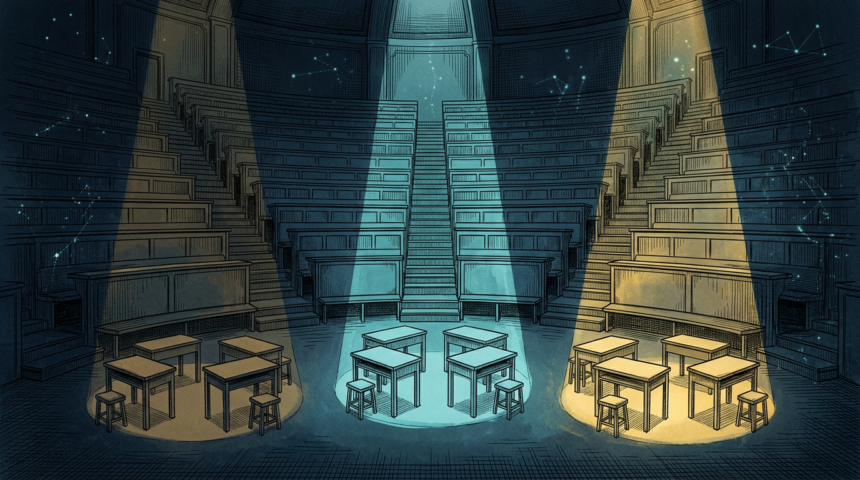
Two years of classroom data point the same way, and the answer is not the one the professor expected.
Thibault Schrepel teaches Law of AI at Vrije Universiteit Amsterdam. Across two consecutive years he split his students at random into three groups.
Teams of four or five took on one task. Twenty minutes was the limit, and the target was a single provision drawn from the EU AI Act.
Graders then weighed substance, clarity, proportionality and innovation.
The three conditions differed only in access. No chatbot was allowed in the first. The second could keep ChatGPT and see its edits appear in the text, with no instruction attached. The third received hands-on coaching in prompting and in checking what the model produced.
The no-AI cohort placed last both times. Unguided access beat it, and trained access beat both. Schrepel had predicted the opposite for the untrained group and wrote, plainly, that he was wrong.
Read narrowly, the result says the active ingredient is teaching, not permission. That reframes the policy fight: the open question is how schools build judgment around these tools, not whether students may open them.