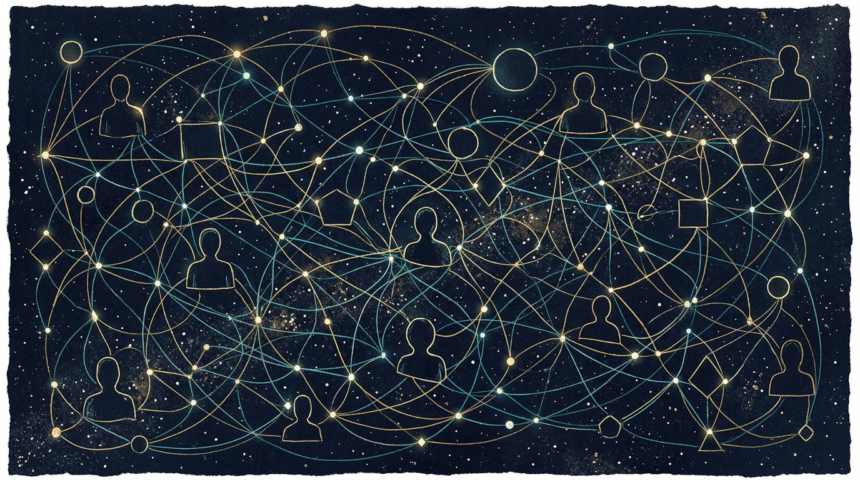
A new essay from researchers tied to Google argues the field is chasing the wrong picture of advanced AI. Instead of one machine that keeps sharpening itself, they describe intelligence as something that emerges from groups.
Benjamin Bratton, Blaise Aguera y Arcas and James Manyika call their vision Artificial Symbiotic Intelligence. In it, people and many AI agents coexist, shape each other and decide together. The target of research shifts from building a lone mind to coordinating a network of agents, people and the systems linking them.
The essay builds on earlier work. One preprint lays out the social and institutional case. Another studies reasoning models and finds traces that resemble internal debate, with objections raised and reconciled. That behavior appears during training rather than by design.
The authors also question what an agent is. They describe it as a temporary bundle of models, roles, memories and tools, reassembled with each request rather than a fixed digital twin. Interfaces could move from one-on-one chat toward network views that let people steer many agents at once.
Their warning is that imposing values from above will not hold. Values, they argue, take shape through constant contact among people, agents and institutions, and the task is to give that negotiation a structure.