

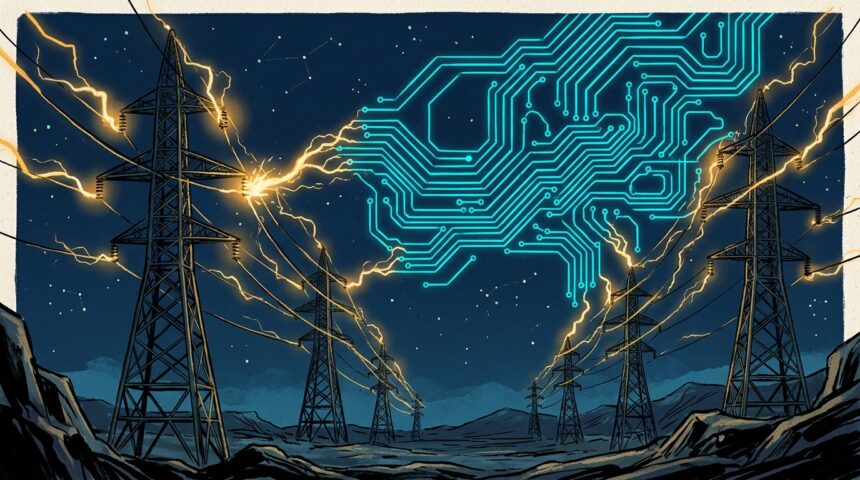
The bottlenecks in AI have moved from algorithms to amps. Andreessen Horowitz is responding with a $1.1B Machine Age Fund dedicated to the physical layer of the industry: chips, memory, networking, storage, data centers, robotics, and home AI appliances.
Five general partners, including Ben Horowitz and Martin Casado, announced the vehicle on August 28. Their rationale, in their words: “it’s time to open the throttle and accelerate the physical buildout of AI.” The firm argues that every tier of the stack now strains against supply chains, physics, and computer science, and that the moment calls for rearchitecting those tiers as platforms.
The firm’s own numbers sketch the scale of the problem. A Rubin rack packs roughly 28 times the compute of an H100 rack, and copper has run out of headroom inside the rack. Rack power has climbed from a 5-to-10-kilowatt range to 100 to 250 kilowatts, with a full megawatt expected within three years. Campuses now scale from tens of megawatts to hundreds, occasionally hitting gigawatt size, pulling more electricity from behind-the-meter sources.
The fund reaches down to the electrical layer of AI, a part of the stack the firm says few software investors touch.