

The Unassailable Fortress of Veldhoven
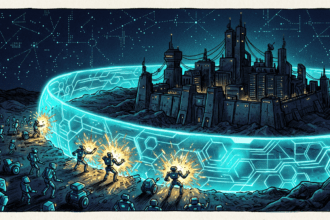
ASML is not just a company; it is a force of nature. With a market cap north of $530 billion, the Dutch lithography giant controls the single most critical bottleneck in the AI supply chain: the machines that print the world’s most advanced chips. CEO Christophe Fouquet, in a rare interview, is refreshingly unbothered by the swarm of challengers promising to disrupt his monopoly. From Peter Thiel-backed Substrate to rumored reverse engineering efforts in China, Fouquet’s response is a masterclass in dismissive confidence. He argues that building an EUV machine isn’t just hard; it is a multi-decade, multi-billion-dollar gauntlet that requires 80% of the technology to already exist before you even start. The audacity of a startup claiming it can replicate what took ASML 30 years is, in his view, adorable naivete.
The Price of Progress and Geopolitical Games
Fouquet also directly addressed the elephant in the room: the eye watering cost of his latest high-NA EUV machines, which can exceed $400 million. While TSMC has publicly balked, Fouquet coolly counters that the per wafer cost drops by 20-30%, making the math inevitable. More provocatively, he weighs in on export controls, subtly calling out Nvidia’s Jensen Huang for hypocrisy. While Huang preaches selling globally but keeping a generation gap, Fouquet points out that ASML is already selling eight generations old tech to China. He suggests there is room for rationalization, implying the U.S. government’s current restrictions are too lax, leaving the door open for competitors. This is a man who knows his leverage, and he is using it to dictate the terms of the global AI arms race.
The Myth of the Chinese Copy
The most explosive claim Fouquet dismantles is the notion that Chinese engineers have successfully reverse-engineered ASML’s EUV technology. He states flatly that no EUV machine has ever been shipped to China, and the company maintains a strict internal firewall preventing any Chinese employees from accessing EUV intellectual property. He argues the facts point to very little, if any, progress. This is a direct challenge to the narrative of imminent Chinese technological parity. Fouquet is betting that the sheer complexity of the system, the interdependency of its components, and the lack of hands on experience will keep China at bay for years. For the AI world, this means the bottleneck on compute is not just a chip problem; it is a Dutch monopoly problem, and it isn’t going away anytime soon.
Source: Techcrunch