

The Death Knell for a $2 Billion AI Handshake
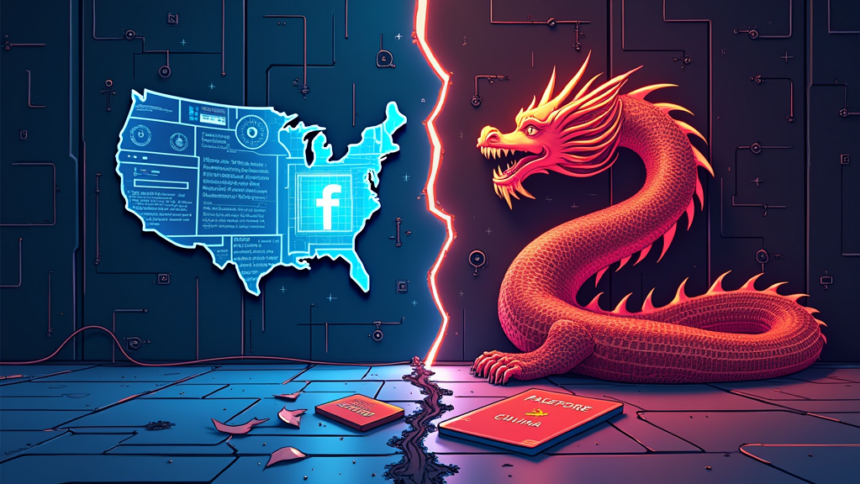
China’s Ministry of State Security just torched the deal of the year. On April 27, Beijing officially ordered Meta to unwind its $2 billion acquisition of Manus, the startup behind the wildly hyped general AI agent. This move caps months of regulatory limbo that saw Manus cofounders Xiao Hong and Ji Yichao grounded in China, forbidden from leaving while the state pored over their books. The message is unmistakable: the era of easy cross border AI acquisitions is dead, and national security paranoia has officially engulfed the entire tech supply chain.
This isn’t just a loss for Mark Zuckerberg’s personal superintelligence fantasy. It is a brutal reality check for any founder who thinks they can play both sides. Manus itself is a paradox a Chinese built wrapper around Anthropic’s Claude 3.7 Sonnet, a US model that is itself restricted from sale in China. The entire business model was a geopolitical tightrope walk, and the Chinese government just cut the wire.
The Singapore Wash That Didn’t Work
The founders tried everything to sever their ties. They moved their team to Meta’s Singapore office. They registered Butterfly Effect Pte in Singapore and set up a parent company in the Cayman Islands. They even snubbed Chinese authorities who requested meetings and investment. This is the classic Singapore wash strategy used by Chinese founders to rebrand as international entities. But this time, the riptide of US China rivalry was too strong.
For Meta, the unwinding is more than a financial setback. It throws a wrench into their AI pivot after burning $80 billion on the metaverse flop. The Manus team was already deeply integrated into Meta’s Singapore operations. For the broader startup world, the lesson is grim. As Wayne Shiong of Argo Venture Partners noted, you now need to be offshore from day one. The window for building a Chinese AI company and selling it to the West has slammed shut. The only losers here are the founders caught in the middle and the users who will see less innovation as the tech world fractures into two distinct, incompatible ecosystems.
Source: Arstechnica