


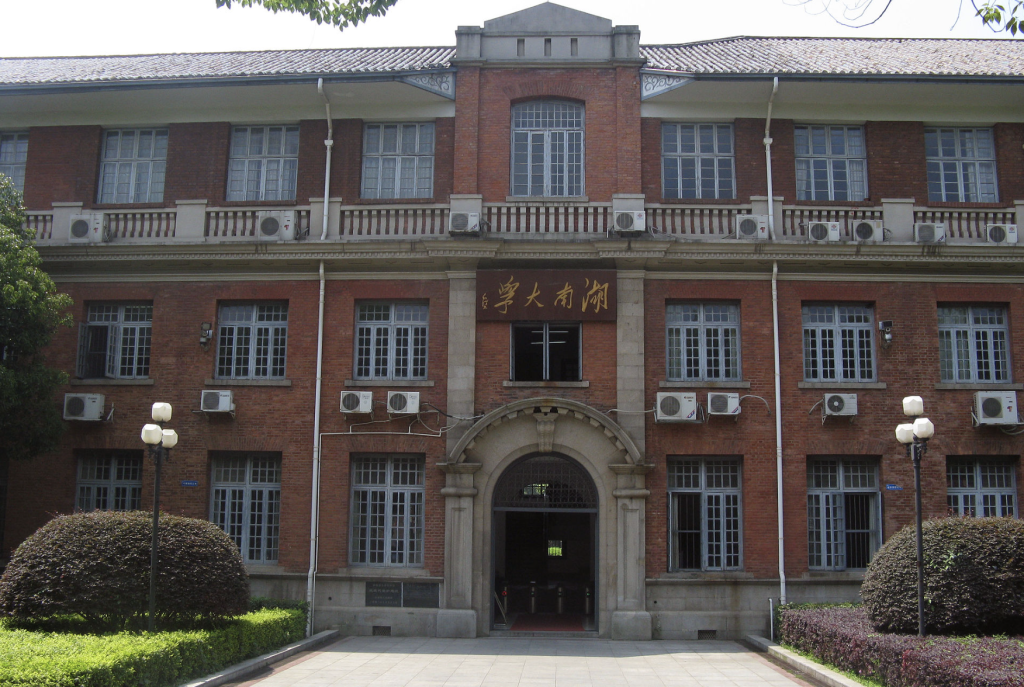
As first reported by Huasheng Online, the finals of China’s first National Artificial Intelligence Application Innovation Competition concluded on June 22 at Hunan University, drawing 675 finalist teams from an original pool of 4,703. As first reported by Huasheng Online, the event—jointly hosted by the China Society of Technology and Economics and supported by local institutions—became a landmark gathering of university innovators and enterprise collaborators. The competition focused on scenario-driven AI applications with real-world relevance across industries.
Source: wikipedia.org.
Held over three months, the event featured both general and specialized tracks, exploring domains like smart manufacturing, healthcare, and digital tourism. Projects were evaluated by a 100-member expert panel for their technological innovation, implementation potential, and social value. Impressively, the average readiness level of winning projects reached Level 7, surpassing industry benchmarks and indicating strong industrial applicability.
Among the standout entries was “PriceMaster” from Hunan University, which offers dynamic pricing for small commodity markets using automated decision-making and demand-cycle analysis. Another highlight, “MediChain Intelligence” from Tsinghua University, integrated global medical data to deliver smart, three-tiered healthcare solutions for patients, doctors, and administrators. Both projects demonstrated clear potential for deployment and economic impact.
The competition also reinforced Hunan Xiangjiang New Area’s position as a national AI hub. In 2024 alone, the region’s AI industry achieved a 21 billion yuan output and housed 280 enterprises in sectors ranging from smart chips to autonomous vehicles. Local officials emphasized that the event is only the beginning of further transforming technological achievements into engines of economic development.
By combining innovation, application, and industry relevance, the National AI Application Innovation Competition has not only spotlighted promising projects but also laid a strong foundation for deepening AI’s integration with China’s real economy and global competitiveness.