



As first reported by Securities Times, the global semiconductor industry is experiencing a profound shift under the dual pressures of surging AI demand and geopolitical turbulence.
At the TSS 2025 Semiconductor Industry Executive Forum, TrendForce analysts pointed out that while AI computing has injected strong momentum into the market, it has also intensified challenges related to supply chain regionalization, tariff policy volatility, and structural production realignments. Taiwan, though still dominant, is seeing a projected decline in advanced process share, while the U.S. and mainland China are aggressively ramping up domestic capacity in advanced and mature nodes respectively.
Source: linkedin.com/pulse/processing-powerhouse-understanding-cpus-gpus-tpus-dpus-kapil-uthra-ojm7f.
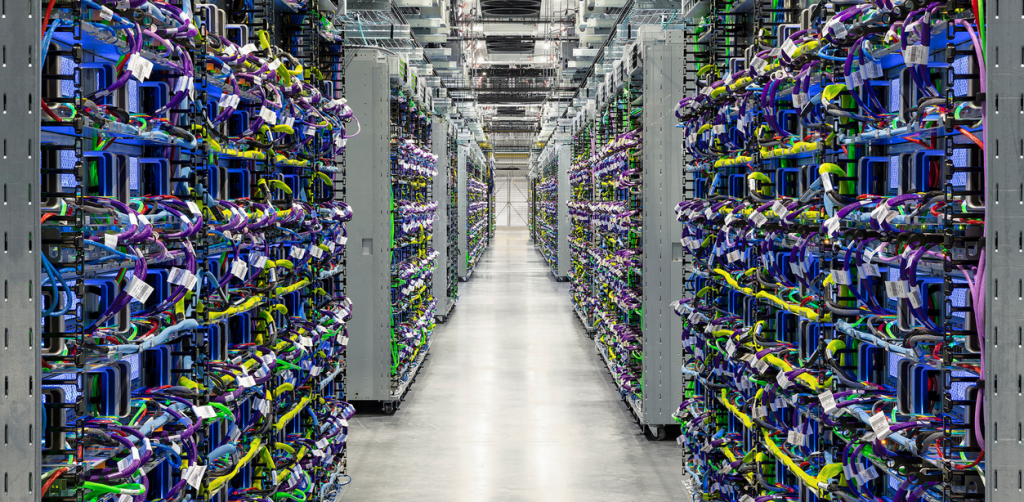
In parallel, the AI-driven need for computing power is accelerating in-house chip development. Nvidia continues to dominate the cloud training market with its AI servers, but hyperscalers like Google, Microsoft, and AWS are responding by developing proprietary chips like TPUs and DPUs. This strategic shift aims to reduce reliance on Nvidia’s architecture and improve performance efficiency. By 2025, in-house developed chips are expected to make up 25% of AI server deployments, supported by rapidly evolving infrastructure and increased investment in ASIC customization.
The rise of High Bandwidth Memory (HBM) is another direct consequence of AI’s growth. HBM demand is forecast to increase by 94% in 2025, displacing traditional DRAM products and driving up DDR4 prices due to limited capacity. Nvidia remains the largest HBM consumer, but competition is expected to heat up as other chipmakers accelerate their own HBM-integrated AI chips. Meanwhile, the solid-state drive (SSD) and flash memory markets are also being restructured, with PCIe Gen 5.0 and Gen 6.0 adoption advancing to meet AI’s high-throughput needs.
AI is also creating opportunities in wide-bandgap semiconductors, particularly Gallium Nitride (GaN), which is moving beyond consumer electronics into AI data centers, automotive applications, and humanoid robotics. GaN’s market is expected to grow from under US$400 million in 2024 to over US$3.3 billion by 2030. In AI servers, GaN enables efficient power supply designs, especially as server power levels exceed 7 kilowatts. In robotics, GaN-enhanced joints promise higher efficiency and load-bearing capability, supporting AI’s expansion into more advanced physical applications.
AI is no longer just a technological trend—it’s the structural force reshaping the global semiconductor ecosystem. From accelerating in-house chip innovation and upending memory supply chains to intensifying regional production divergence and propelling new material adoption, the industry is entering a new era defined by agility, localization, and relentless performance demands. Those who adapt fastest to this AI-driven realignment will set the pace for the decade ahead.