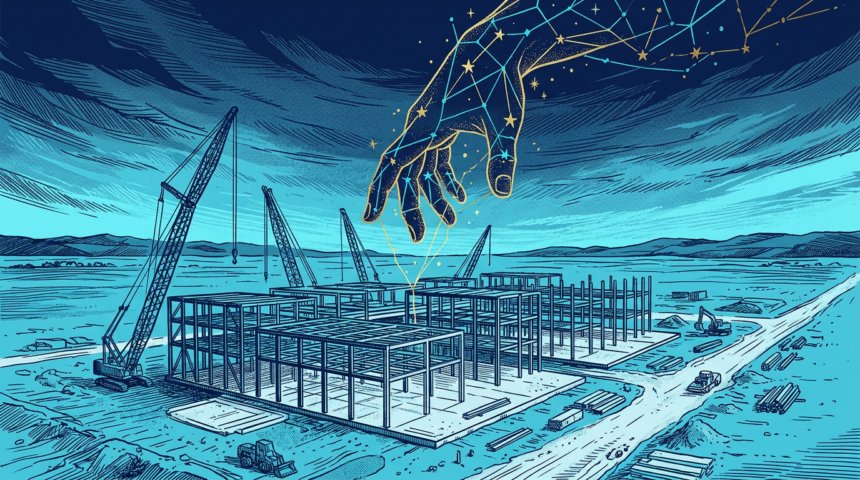
Crusoe confirmed on Friday that it sold Google an incomplete data center campus in southeastern Wyoming, closing out a project the Denver developer promoted loudly last year and never finished on schedule.
Tallgrass, the infrastructure company backed by Blackstone, originally planned the site with Crusoe, and the pair aimed to push it toward 10 gigawatts of capacity, the scale frontier labs now treat as entry level.
Google was the customer Crusoe wanted for the campus and never signed it. Bloomberg reported in June that concerns about cost and the build timeline under Crusoe had surfaced, and Google opted to buy the project outright rather than wait for it.
No purchase price was disclosed by either side. Google did commit $17B to development, far more than whatever the land and partial construction changed hands for.
The squeeze on independent builders
The episode illustrates a problem spreading across the infrastructure layer. Land, power and capital can all be lined up by an independent developer and still lose to execution. Transformers and turbines now take years to secure, and local opposition runs a second clock that funding cannot reset.
What Crusoe keeps
This is not an exit. A second campus for Google near Amarillo, Texas is still under construction, and the broader relationships survive. Work at Abilene, Texas proceeds in phases for Oracle and OpenAI, a 900-megawatt Microsoft campus is rising alongside it for mid-2027, and Meta buys capacity too.
September also brought a $3.9B funding round and new directors, among them JB Straubel. Investors were plainly not spooked by Wyoming.
The takeaway still lands. Raising money for AI infrastructure has become routine. Finishing the building is the skill in short supply.