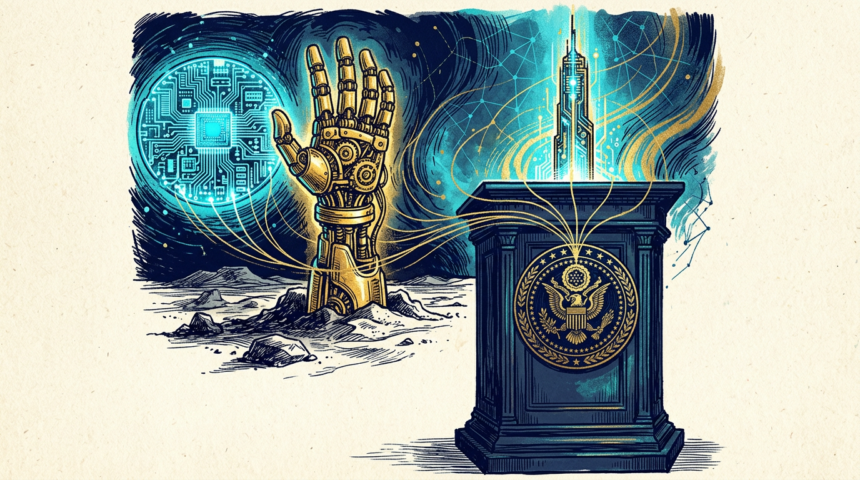
South Korea will route 21.3 trillion won, about $16B, into three AI programmes under the 2027 budget President Lee Jae Myung presented to the National Assembly on Monday. The figure nearly doubles the 10.8 trillion won committed for 2026.
The total budget request is 820.9 trillion won, or roughly $612.8B. Lee asked for bipartisan support and framed the package around what he called growth for all.
Three pots of money
Semiconductor production infrastructure takes 2 trillion won. Physical AI demonstrations, meaning robots and embodied systems, get 500 billion won. The largest single allocation, 4.7 trillion won, is for building domestic frontier models.
That last line is the most political. Korea has world-class memory manufacturers but has not produced a frontier language model competitive with US or Chinese labs. Paying for one from the public purse treats model ownership as strategic infrastructure rather than a market outcome.
Defence joins the same ledger
Military spending rises 8 percent to 73.3 trillion won, with Lee pledging a transition toward forces built around AI, robots and drones. The budget therefore funds both the chips and the buyer.
The spending lands as Korean hardware exports surge on AI demand, and as Seoul’s own National Growth Fund has been placing large cheques into domestic chip startups. The government is now simultaneously a customer, an investor and a standard-setter for the sector.
Whether nearly doubling one year’s commitment converts into a competitive model is a question no budget line answers. Assemblies approve the number; the labs have to earn it.