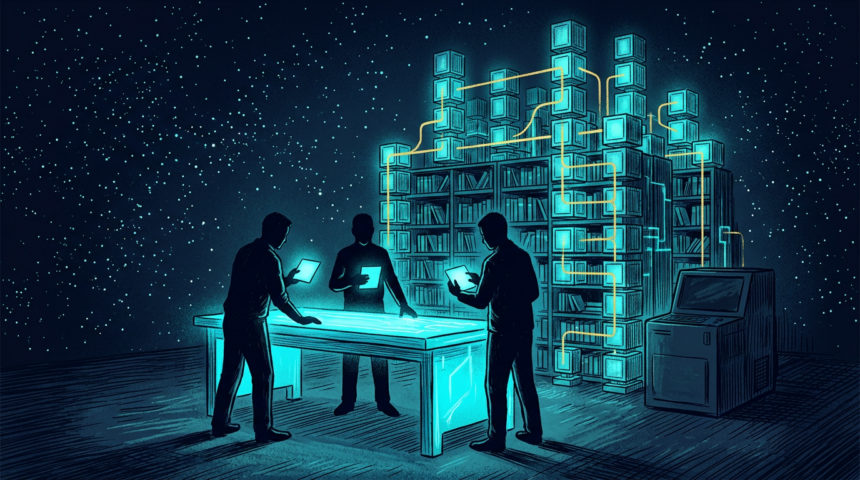
Asking a model to regenerate the same database query on every run produces two problems: the bill, and the chance that the answer drifts. Sema4.ai’s third platform release attacks both by pulling recurring work out of the model and into code that customers approve in advance.
The company calls the mechanism Verified Queries. It reuses data-access patterns a team has already signed off, which Sema4.ai says uses 80 percent fewer large language model tokens and returns results about four times faster than asking a model to compose the query fresh each time. A companion feature, Verified Logic, covers calculations, at 50 percent fewer tokens and 30 percent faster runs.
Teams share one set of agents
The rest of the release targets collaboration. Workspaces now let groups manage agents, skills, memories, files and data collectively rather than per seat. Memories record customer-specific rules so an agent reapplies them without being told again.
Sema4.ai also widened interoperability, adding connectors for productivity assistants including Claude Cowork and Microsoft Copilot plus access to Microsoft Fabric. An Agent Inbox monitors email in Microsoft 365 and Google Workspace and routes messages using plain-language rules.
Audit trails as the selling point
Every agent step is logged with before-and-after values alongside an activity timeline. That is aimed at regulated buyers who need to show an auditor what a system did and why, a requirement that has slowed agent rollouts in finance and healthcare.
Chief executive Rob Bearden frames the pitch around reliability rather than capability, arguing that building an agent is no longer the hard part. Whether buyers accept that framing will depend on how the claims hold up outside the vendor’s own benchmarks.