Deepgram said Thursday it is acquiring Daily, the company behind Pipecat, and both sides committed to keeping the framework open source.
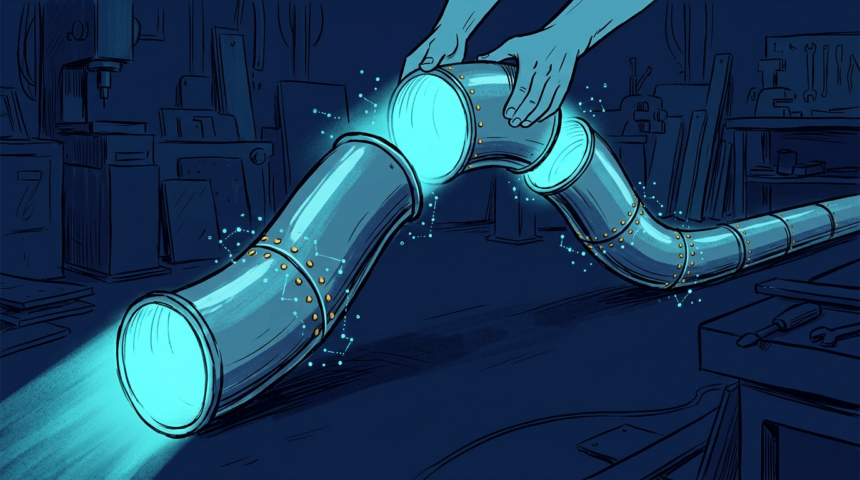
Terms were not disclosed. Pipecat is plumbing: it moves voice and video streams through a pipeline of speech recognition, a language model and a speech synthesizer, so developers do not hand-build the transport layer for a talking assistant. It has become the default scaffold for teams shipping voice agents.
Open source status was the obvious question, since the framework competes with nothing Deepgram sells except the temptation to wall it off. Daily co-founder Kwindla Kramer said he had heard from plenty of suitors but picked Deepgram because chief executive Scott Stephenson was committed to keeping Pipecat open and vendor-neutral permanently. Stephenson framed openness as commercial advantage, saying he wants developers to use whichever models fit their case rather than Deepgram’s by default.
Daily brought more than the framework. It has raised over $62M from investors including Tiger Global and Nat Friedman, and both firms came out of the same Y Combinator batch in 2016. Deepgram reached unicorn status earlier this year on a $130M Series C. The two also launched a Real-Time Context Standard, an open protocol that defines how signals like a whisper get passed to a model.
The deal follows a pattern across voice AI this year. Model vendors are buying the orchestration layers that sit between their APIs and end users, because the toolkit, not the model, decides whose tokens get called.