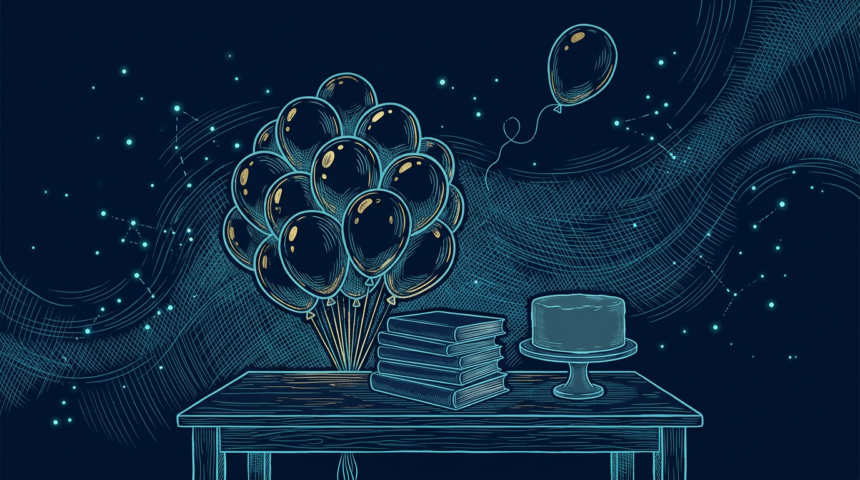
A plate of doughnuts spelled out a greeting. Purple balloons filled the cafeteria, marquee letters glowed with a name, and flyers on the walls welcomed a new colleague called NOA when Macmillan staff walked into the Lower Manhattan headquarters one morning in January 2024.
NOA, short for No Ordinary Assistant, was an AI chatbot built by Chaptr, a German software vendor backed by the publisher’s parent company Holtzbrinck, according to a staff email. Several employees who happened to be assistants themselves told WIRED the acronym landed badly.
The same email promised a sealed environment where proprietary material could go without leaking to third parties. Training sessions warned the tool might invent things and needed human fact-checking, yet people were urged to lean on it for emails, marketing research, copy drafts and brainstorming. Some recall instructions to paste only a fraction of a manuscript at a time. Voice tone could be dialed from lighthearted through spartan and pessimistic to sarcastic or regretful, and by later in 2024 an internal prompt was circulating to make NOA write performance-review goals.
Enthusiasm never arrived. Staff describe the assistant as unhelpful, with one flat verdict: terrible, and nobody used it. By autumn 2025 the vendor had told the whole company, in one mass email, that the assistant would be retired.
What followed is less tidy. Employees say leadership steered Google Gemini into editorial work, and an editor who tried it on literary agents’ submission letters called the evaluations useless. Macmillan vice president Kelly Collins said Gemini serves business needs, denied any directive to apply it inside publishing, and disputed the account of the NOA rollout without saying what was wrong.