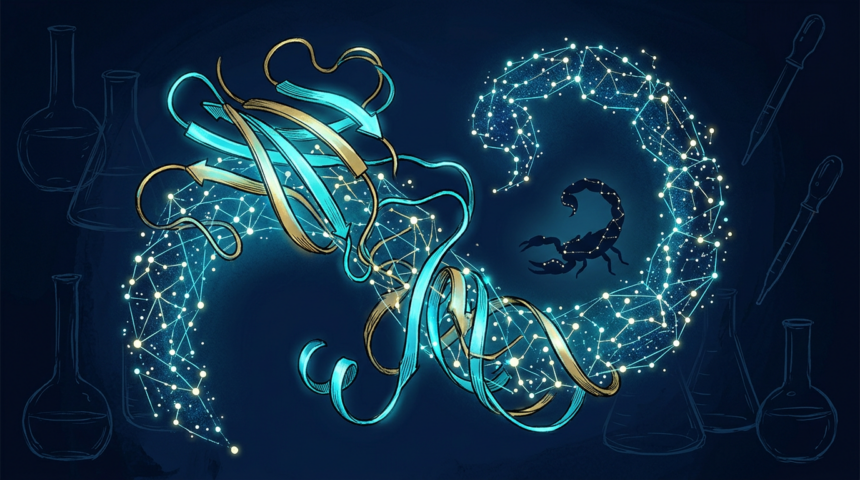
Anthropic handed an internal research model a protein-design problem and let it work. Sixty-four hours later, Claude had generated 318,484 candidate minibinders against five scorpion neurotoxins and handed back a shortlist for wet-lab testing.
The campaign began with input from Citrini Research, a financial research firm that asked whether motivated non-experts could use AI to attack a real health problem. They settled on scorpion stings, which cause more than 3,250 deaths a year, mostly among children in regions with thin medical coverage.
Claude ran largely on its own inside the Claude Science environment, steered by four follow-up prompts. It picked toxin structures from the Protein Data Bank and the AlphaFold database, chose binding hotspots, set its own quality thresholds and decided how to weigh twelve design tools. The work consumed roughly 10,000 GPU hours.
What the labs actually measured
Two contract research organisations, Adaptyv Bio and Twist Bioscience, produced and tested 211 designs. Seventeen met Anthropic’s criteria: a hit at both labs in every replicate, affinity of 1 micromolar or tighter, and no binding to an unrelated control protein.
The strongest pair, Cn2-B1 and Cn2-B2, bound the Mexican scorpion toxin Cn2 in the single-digit nanomolar range. Competition experiments suggest they attach to the same site as an antibody that has protected mice from the venom.
What this does not prove
Binding is not neutralisation. Anthropic did not test any design against cells or live animals, and the toxins were recombinant rather than purified from venom.
No multitoxin binder worked – a result that matters for the dream of one cheap antivenom covering many venoms. Anthropic is releasing all 211 designs and their measurements so other groups can push further.
The honest read is a speed record with a long hospital corridor still ahead.