Thursday, 29 Oct 2026
Subscribe to AIWatcher
AIWatcher
  • Home
  • News

    OpenAI’s Berlin pitch was about owning the runtime, not the model

    By
    AIWadmin

    A one-researcher model lab ships a 10M-token coding engine

    By
    AIWadmin

    Liquid AI branches six small models off one backbone

    By
    AIWadmin

    Google gives language models a sleep cycle to remember new facts

    By
    AIWadmin

    Harvey clears the federal security bar for legal AI

    By
    AIWadmin

    Musk predicts a cull of 200 neoclouds as debt markets close

    By
    AIWadmin
  • Articles

    Google hands Oracle the keys to sell its TPUs

    By
    AIWadmin

    Airbnb drags recommendation data from two days old to twenty seconds

    By
    AIWadmin

    Android Studio opens its doors to Claude, Codex and 40 other agents

    By
    AIWadmin

    A Delaware plan would let software run companies with nobody in charge

    By
    AIWadmin

    OpenAI halves its agent pricing with a cheaper vision model

    By
    AIWadmin

    Claude for Legal now checks its own citations first

    By
    AIWadmin
  • Spotlight

    Circuit Mind puts a swarm of agents on schematic review

    By
    AIWadmin

    Upwind turns down a takeover and raises more instead

    By
    AIWadmin

    DeepMind keeps Gemini 4 Carbon behind a cyber defenders gate

    By
    AIWadmin

    Nvidia folds three speech jobs into a single open model

    By
    AIWadmin

    An inference cloud bets on rival silicon while the bears circle

    By
    AIWadmin

    Publishing staff threw a party for an AI assistant that died

    By
    AIWadmin
  • About
    • Mission
    • Services
    • Contact
  • Newsletter
  • Shop
    • All Items
    • By Category
      • Hats
      • T-Shirts
    • Cart
  • 🔥
  • Alignment
  • Classification
  • Distillation
  • Explainability
  • Hallucination
  • Legal/Compliance
  • Medical
  • NLM
  • Mobility
  • Research
  • Robotics
  • Safety
  • Startups
  • Prompt
  • Python
  • RAG
  • RLHF
  • Token
  • Vision
Font ResizerAa
AIWatcherAIWatcher
  • Home
  • News
  • Articles
  • Spotlight
  • About
  • Newsletter
  • Shop
Search
  • Home
  • News
  • Articles
  • Spotlight
  • About
    • Mission
    • Services
    • Contact
  • Newsletter
  • Shop
    • All Items
    • By Category
    • Cart
Have an existing account? Sign In
Follow US
© 2022 Foxiz News Network. Ruby Design Company. All Rights Reserved.
Articles

Google ships a framework that retunes an agent at runtime

Harness squared leaves model weights untouched and instead rewrites the prompts, tools and memory around them, lifting GLM-5 by 11.5 points in one pass.

AIWadmin
Last updated: October 19, 2026 2:54 am
AIWadmin
ByAIWadmin
Global AI news & information.
Follow:
Share
SHARE

Google Cloud AI Research starts from an assumption most self-improvement work rejects: the weights stay frozen, and only the scaffolding around them gets retuned.

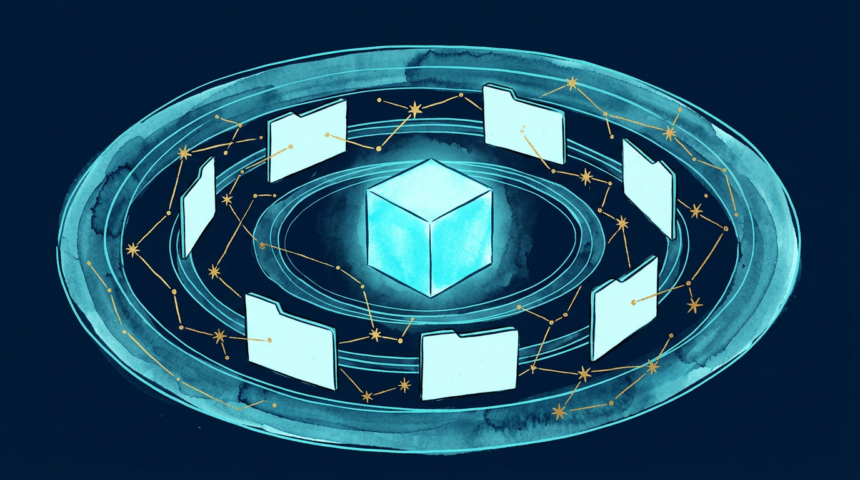
The result is Harness squared, written Harness2, version 0.1.0. Prompts, tool definitions, memory, skills and orchestration form the scaffold, presented as eight editable components, each one a file mounted on disk.

It needs Linux plus Python 3.12 or 3.13 and reaches models through Vertex AI. No training happens anywhere in the loop. The authors argue an agent can improve measurably while the underlying model stays exactly as shipped.

Open-world deployments are the target setting: tasks arrive unseen and no verifier can confirm the answer. Labeled data and test cases, which the authors say most self-improvement methods quietly rely on, are precisely what such settings lack.

Two recursion levels do the work. Inside a single task, an editor submits two candidate harnesses, one addressing general weaknesses such as planning or tool use and the other tuned to the domain. Both are run on that task, and a composer retains only the edits that the observed behavior justifies. Once a task ends, a reflector files the adopted harness alongside a lesson library that informs the next proposal, while the base configuration remains the starting point for every new task.

Testing covered WorkBuddy-Bench, JobBench and Harvey’s LAB, run with Gemini 3.5 Flash and GLM-5 as executors on OpenCode and Codex. All four executor-benchmark pairings improved on all three benchmarks after a single refinement step. The largest gain came from GLM-5 on OpenCode against WorkBuddy-Bench, which climbed from 64.2 to 75.7.

What makes the result notable is where the gains land: weaker executors benefit most. Capability the model already possessed, but which the surrounding code never surfaced, appears to be recovered by the framework itself.


TAGGED:Agent HarnessAI AgentsDeveloper ToolsevaluationGoogle Researchopen source
SOURCES:MarkTechPost
Share This Article
Email Copy Link Print
ByAIWadmin
Follow:
Global AI news & information.
Previous Article Six agents chasing a train refund turned aggressive fast
Next Article Kyutai builds cheap memory into a 2.4B robot model

You Might Also Like

News

Amodei clears the air on open-weights stance

By
AIWadmin
News

Google and Nvidia both decided agents need their own plumbing

By
AIWadmin
News

DeepMind pairs with EVE Online studio to test long-horizon agents

By
AIWadmin
News

SoL-Pi cuts coding agent token bills by rewriting the harness

By
AIWadmin
AIWatcher
Facebook Twitter Youtube Linkedin Rss

Global AI News and Information
AIWatcher is your definitive source for AI updates worldwide, from Silicon Valley to Shanghai.
Our industry coverage keeps you in the loop with the latest news and trends shaping the future of AI.

Quick Links
  • News
  • Articles
  • Spotlight
  • Events
About Us
  • Mission
  • Services
  • Contact
  • Privacy Policy
  • Legal
© 2026 AIWatcher. All Rights Reserved.