


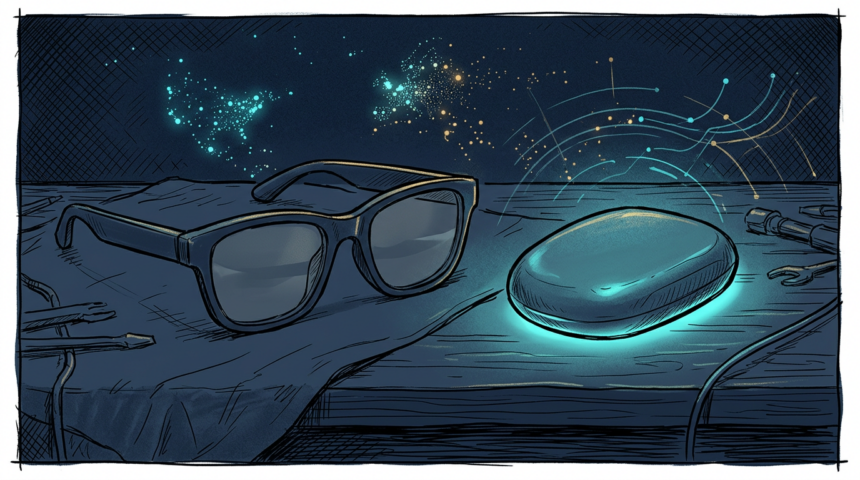
Meta used its Connect 2026 keynote on Wednesday to answer the criticism that made its smart glasses infamous, then handed the crowd something stranger.
The privacy answer is Ray-Ban Meta Audio, the company’s first camera-free pair of AI glasses. Built with EssilorLuxottica, the $349 frames play music and podcasts, take calls, translate speech and talk to Meta’s Muse assistant. They carry no camera, which is the point. Critics had nicknamed earlier models pervert glasses after men were caught recording strangers without consent.
The lineup did not stop there. Ray-Ban Meta glasses moved to a third generation, and Zuckerberg showed a slimmer Quest headset that switches between virtual and augmented reality. Muse itself is heading to the frames.
The oddest reveal came last. Muse Charm is a palm-sized amulet holding a digital avatar that staff call Jolly, a soft-bodied companion for the agent rather than a screen. Zuckerberg admitted the components were still being laid out and promised the device would ship in time for the December holidays.
Meta is following a well-worn path. Friend and other AI pendants turned the wearable totem into an industry cliche, and none of them found a mass audience.
What Meta does have is distribution. Muse drew 500,000 users in its first week, and putting the agent inside glasses, headsets and a pocket toy gives the company three surfaces where its rivals have none.