


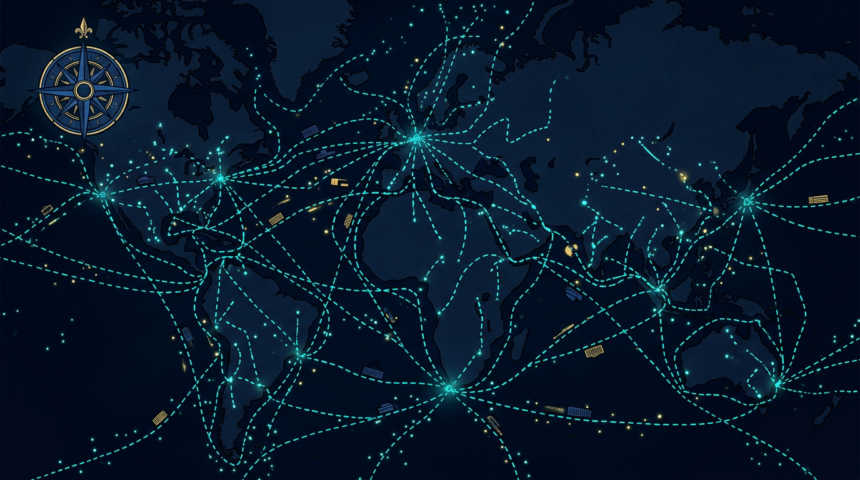
The command responsible for moving American military cargo is deliberately making its schedules messier, on the theory that predictability is now a vulnerability.
General Randall Reed, who leads US Transportation Command, told the DefenseTalks conference on Tuesday that fixed delivery windows let adversaries train models against military logistics. “The adversary can, and will, contest our logistics at any point within the chain,” he said, adding that AI on the other side multiplies disruptions.
The response is randomised push logistics. Algorithms balance transport frequency and destination nodes so routes shift without warning, while autonomy absorbs some of the load on dispatchers working through degraded networks. Reed described predictive demand planning that anticipates shortfalls before units file requisitions, network healing that redraws delivery paths after outages, internet of things sensors tracking cargo, digital twins simulating corridors and distributed ledgers guarding shipment data.
None of it is finished. Reed listed scarce training data, flawed synthetic data and the need for computing power stretching from factory to foxhole as open problems. Engineers are building a verified data layer so corrupted inputs cannot steer automated decisions.
The framing is a shift. Commercial freight optimises to remove variance, while a contested theatre rewards the opposite.