


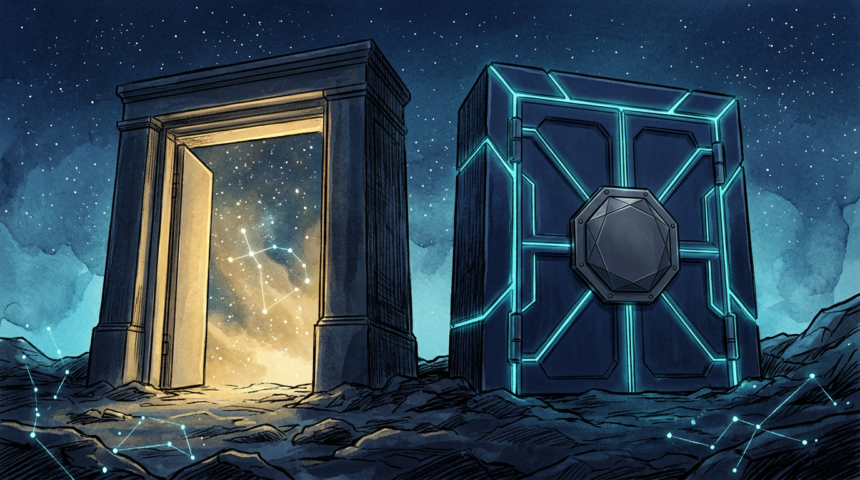
Anthropic is running its two-door playbook again. Claude Fable 5.1 opened to everyone on September 1 through the API, AWS, Google Cloud, and Azure. Claude Mythos 5.1, its gated sibling, stayed inside verification programs for cybersecurity and life sciences researchers, with ties to US government oversight.
Cheaper context reuse is the headline for the public tier. Cache reads now cost $0.25 per million tokens, a 75 percent cut. Anthropic estimates typical workloads run about 25 percent cheaper than on Fable 5, and heavily agentic jobs save up to 45 percent. Standard input and output rates remain $10 and $50 per million tokens.
The benchmark sheet is where the pair separates from earlier Claude generations. Terminal-Bench-Science shows Fable 5.1 at 52.6 percent, against 24.7 percent for Fable 5 and 29.0 percent for Opus 5. CursorBench comes in at 73.4 percent. Mythos 5.1 counters with 60.9 percent on Terminal-Bench 4.0. Anthropic warns that its own safeguards probably shaved points from those scores.
Scientific output accompanied the launch. Protein binders designed by Mythos 5.1 beat the best Adaptyv Bio competition entries 10 times over on binding affinity, and two independent labs verified the work. The same model wrote GPU kernels that lifted seven computational biology models by up to 2.5 times. Fable 5.1 converted NASA Magellan radar data into a detailed elevation map of one-third of Venus, published under Creative Commons before the VERITAS and EnVision missions launch.
Risk assessment keeps Mythos 5.1 in the CB-1 category for chemical and biological work, while Anthropic calls it its strongest cyber model yet within the lower tier of its Frontier Compliance Framework. Claude Security scans now run on Mythos 5.1. Biology safeguards trip 85 percent less often on benign questions, and the EU AI Act watermark applies to both releases.