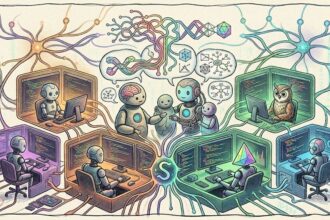



Tencent has launched Team Memory, a beta extension of its open-source Agent Memory project that lets a whole team of AI agents read from one shared hub instead of carrying separate context windows. The company says the repository topped GitHub’s TypeScript trending list this week.
The hub stores four kinds of reusable assets: chat memory distilled into a stable persona, reviewed skills captured from completed work, an LLM-wiki for documents, and a code graph that indexes symbols and call relationships. An agent loadout system equips each agent with only the assets it needs, governed by visibility tiers that range from private to team-wide to agent-specific, and new assets default to private.
Tencent’s own data shows why shared context matters. On its benchmark for whether an agent still applies a user’s persona correctly after extended use, accuracy rose from 48 percent to 76 percent once the persona layer was added. But practitioners flagged a gap within hours of launch: nothing in the documentation describes how a wrong fact gets corrected or expires once other agents have already reused it. Critics noted that one bad write now propagates to every teammate’s agent, and that shared memory drifts fast because a stale fact reaches people who never saw the session that produced it.
Tencent positions the tool as a step beyond retrieval, arguing that RAG answers what can be found while Team Memory also answers who can use an asset, which version is valid, and which agent should receive it.