


The Theater of Automation
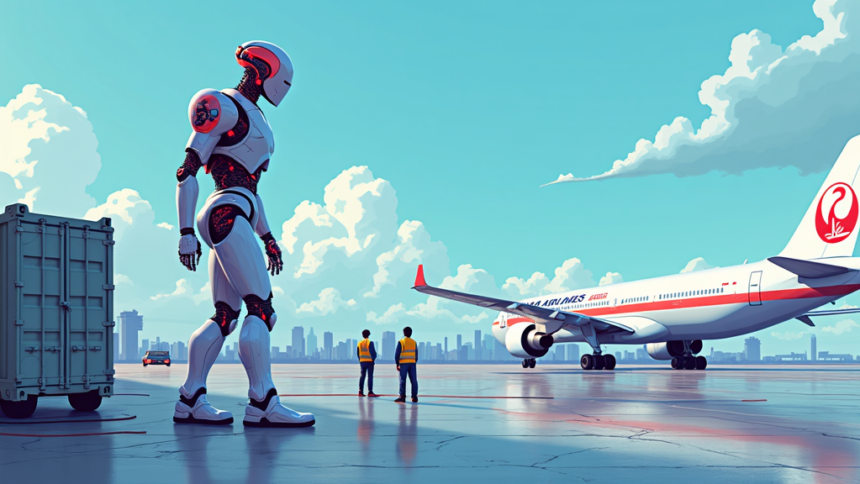
Japan Airlines is rolling the dice on a pilot program at Tokyo’s Haneda Airport that will deploy humanoid robots to handle luggage and cargo, ostensibly to plug a gaping labor shortage. The demonstration, kicking off in May 2026 and running through 2028, will pit Unitree’s G1 robot and UBTECH’s Walker E against the messy reality of airport ground operations. But early evidence suggests this is more performance art than productivity revolution. A staged video shows a robot wobbling up to a cargo container and vaguely nudging it, while a human worker still has to activate the conveyor belt. This isn’t automation. It’s a photo op.
The Reality Check
Let’s be clear about what’s really going on here. Japan’s ground crew workforce has shrunk from 26,300 to 23,700 between 2019 and 2023, while Narita Airport was rejecting over 30 percent of requested flights due to staff shortages. The country is desperate. But throwing $13,500 humanoid robots at a complex, dynamic environment like an airport is a Hail Mary, not a strategy. Humanoid robots have struggled for years in controlled warehouses and factories. Now they’re being asked to navigate aircraft cabins, baggage carts, and safety zones where a plane lands every two minutes. The pilot’s first step is literally to figure out which areas won’t get the robots killed or cause a disaster. This is a textbook case of tech solutionism: treating a human infrastructure problem with flashy but untested hardware.
The Safety Stalling Point
What’s conspicuously absent from the press release is any mention of safety benchmarks. No links to CVEs for robotics safety software. No disclosure of failure rates. The companies involved, GMO AI & Robotics and JAL Ground Service, have offered no public data on collision avoidance or emergency stop protocols. In an environment where one wrong move could send a cargo container into a jet engine, the silence is deafening. Until these robots can demonstrate reliable performance without human babysitters, this test is less a solution and more a gamble with passenger safety and operational reliability.
Source: Arstechnica