


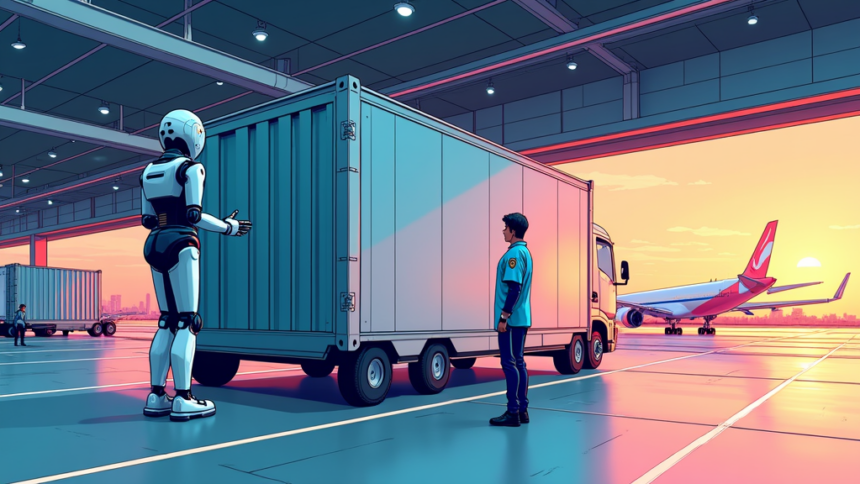
Japan Airlines is launching a trial at Tokyo’s Haneda Airport that puts humanoid robots to work as baggage handlers and cargo loaders. The demo, which runs through 2028, is a direct response to a brutal labor shortage that has left Japanese airports scrambling. Narita Airport, for example, couldn’t fulfill over 30 percent of requested flights in late 2023 due to a lack of ground crew. The airline’s subsidiary JAL Ground Service has partnered with GMO AI & Robotics Corporation to test the G1 robot from Unitree Robotics and the Walker E robot from UBTECH Robotics. But the early footage is far from convincing: a video shows one robot tottering up to a cargo container and making a vague pushing motion while a human worker actually activates the conveyor belt. These robots remain expensive too, though the Unitree G1 starts at $13,500 a unit, which is cheap by humanoid standards but still a significant investment for a machine that can barely mimic a shove.
The Humanoid Hype Meets Grim Reality
Let’s be clear: humanoid robots have been the darlings of AI hype cycles for years, but they have consistently failed to deliver in messy, real world environments. While specialized robotic arms excel at repetitive tasks in factories and warehouses, humanoids must navigate open, unpredictable spaces like airport tarmacs without dedicated workstations. Japan Airlines hopes that AI powered humanoids can adapt to human environments without major modifications, but that is a monumental AI challenge. The pilot program’s first step is literally figuring out which airport areas are safe enough for these machines. At Haneda, where flights arrive every two minutes, a robot that missteps isn’t just a PR disaster, it’s a safety hazard. No CVEs are associated with this testing.
The Real Inequality Nobody Is Talking About
This push for humanoid labor isn’t just about efficiency. It’s a signal that corporations would rather automate than invest in human workers with decent wages and working conditions. Japan’s ground crew numbers dropped from 26,300 to 23,700 between 2019 and 2023, and the response isn’t to make those jobs more attractive, it’s to replace them entirely. The narrative that robots will free humans for higher level work is a convenient fiction when the actual jobs being eliminated are the ones that provide stable income for thousands of workers. Until humanoid robots can actually do the job without a human pushing the button for them, this is more about cost cutting ideology than technological readiness.
Source: Arstechnica