

As first reported by Business Insider, President Donald Trump’s “Big Beautiful Bill” includes a controversial provision that would prevent U.S. states from passing or enforcing AI regulations for the next decade. While supporters argue the moratorium would avoid a patchwork of state laws and foster innovation during a pivotal tech race with China, even some of Trump’s most vocal backers are now objecting. The backlash underscores a rare divide within the MAGA movement over tech policy.
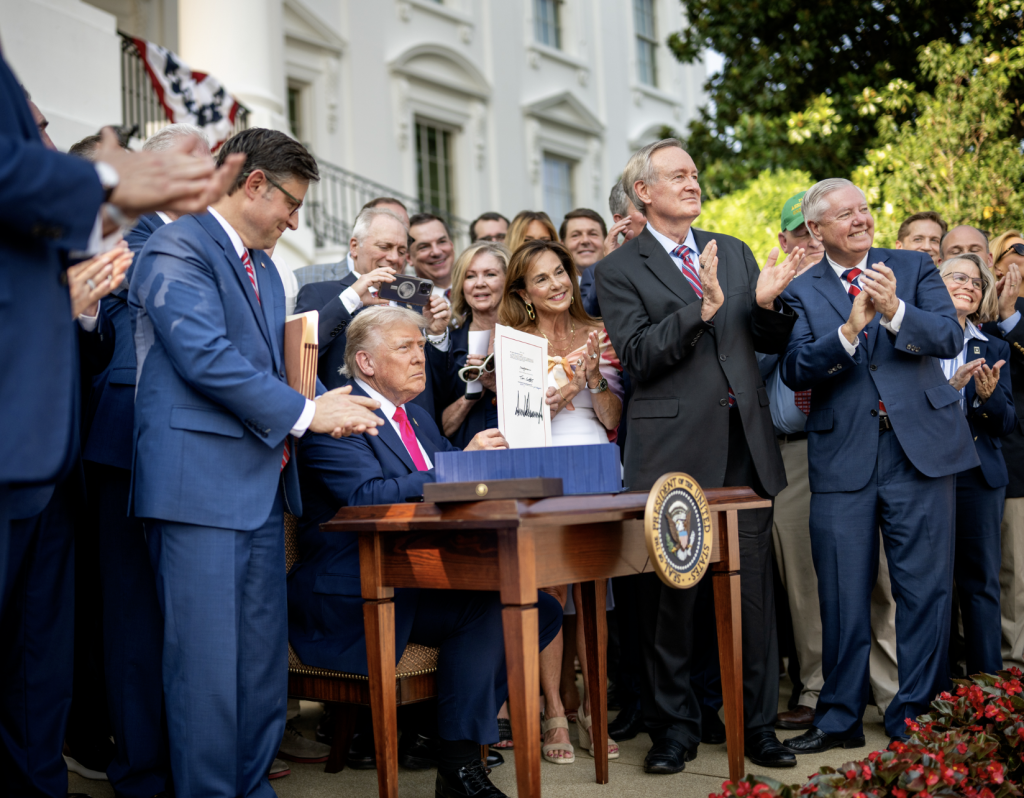
Source: wikipedia.org.
Representative Marjorie Taylor Greene, a prominent Trump ally, said she was unaware of the AI clause when she initially supported the bill and has since labeled it “potentially dangerous.” She vowed to oppose the bill unless the provision is removed. Other Republicans, such as Senators Josh Hawley and Marsha Blackburn, echoed similar concerns, citing the importance of federalism and states’ rights. Hawley also expressed openness to collaborating with Democrats on an amendment to eliminate the AI regulation ban.
While the House version of the bill includes an outright ban, the Senate version takes a more indirect route by threatening to withhold broadband funding from states that enact or enforce AI regulations. This approach has drawn criticism from both sides of the aisle, including Senator Chris Murphy, who described it as a concession to Big Tech interests. Meanwhile, Anthropic CEO Dario Amodei, in a New York Times op-ed, warned that a decade-long moratorium without a comprehensive federal policy would leave the U.S. vulnerable to regulatory gaps.
The bill’s fate remains uncertain as Republican leaders push to pass it before July 4. A final decision on whether to strip the AI provision could come during last-minute negotiations in the Senate. Trump himself has not commented publicly on the matter, and the White House declined to respond to questions about his stance.
The debate over Trump’s AI moratorium highlights growing tensions between national tech strategy and local governance, even within his political base. As lawmakers weigh innovation against oversight, the outcome could set the tone for U.S. AI regulation in the coming decade.