


Copper stops being useful at roughly one meter per lane, which is why an electrically wired accelerator cluster tops out at one or two racks.
Lightmatter is betting the next tier of scale-up networking has to be optical, and it has joined the Open CPX multi-source agreement to argue the point with hardware. Its new Passage L20 CPX module, which the company calls the first Open CPX module for AI infrastructure using bidirectional links, carries 6.4 Tbps in each direction for 12.8 Tbps total across 32 lanes per direction at a 212.5 Gbps PAM4 rate.
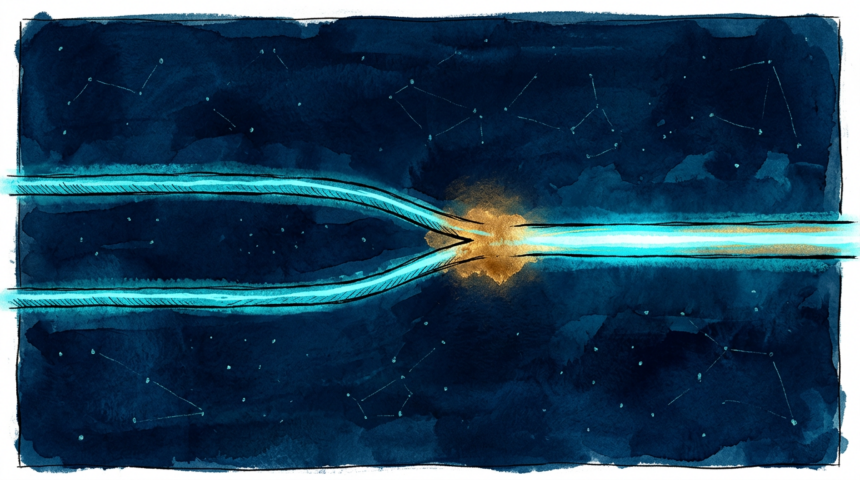
Bidirectional optics work by assigning each direction its own wavelength, so transmit and receive share a single strand instead of using two. Founder and chief executive Nick Harris said AI infrastructure is outgrowing copper, and that shipping optics and fiber into production now means the hard parts are already proven when co-packaged optics arrive.
The arithmetic at pod scale is the pitch. Lightmatter estimates a 512-GPU pod drops from about 131,000 fibers to 65,000, sheds roughly 16,000 connectors and more than 200 miles of fiber, and takes about 15 percent off total scale-up interconnect cost. Eliminating the shuffle boxes that route those connectors also halves the passive components that can fail.
A September 14 technical brief from Taylor Groves and Lars Johnsson supplies the detail: the conventional link architecture needs 32,768 connector endpoints cleaned and tested, work the authors put above 1,000 hours per pod.
The module runs on 1331 and 1311 nanometre O-band wavelengths, spans more than 500 meters on single-mode fiber, and pairs with Lightmatter’s Guide DR laser or compatible sources. Evaluation kits are expected in the first quarter of 2027. Specifications and cost figures are preliminary.