


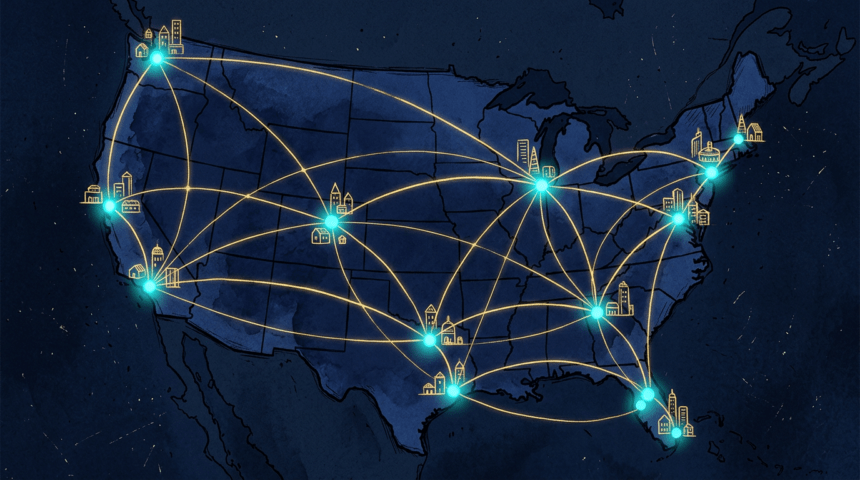
Universities that sit outside the frontier of AI research are getting a shot at $100 million in federal money to build regional compute hubs. Announced August 4, the effort will create up to 10 regional partnerships that combine hardware, data and training for academics who lack access to frontier-scale computing.
Under the cost-sharing model, state or multistate groups assembled from universities, state and local governments, philanthropies and industry will own and operate the compute. The NSF’s share covers the coordination layer: consortium management, workforce development and faculty training, with a single award per state or region.
Industry support comes from NVIDIA, which will supply training resources, educator enablement and technical guidance, with AMD, Intel, Dell Technologies, Hangar and the Secunda Innovation Fund also named as backers. Brian Stone, the acting NSF director, said the effort would empower researchers, students and communities to advance AI-enabled science and drive the next generation of breakthroughs.
The program builds on the NSF-led National Artificial Intelligence Research Resource pilot, which supported more than 700 projects over two years, from protein prediction to infectious disease modeling. NVIDIA points to its 2020 arrangement with the University of Florida as the template, one that has since grown to more than 300 AI-focused faculty and $511 million in research awards.