

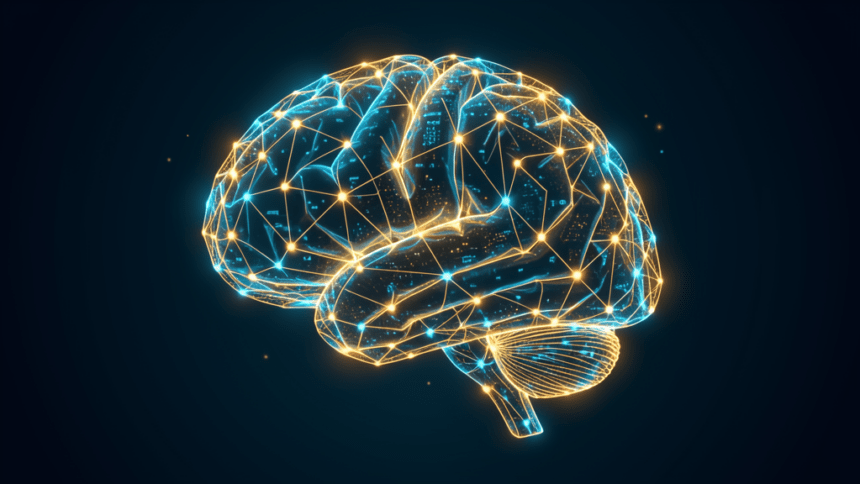
Anthropic has developed a groundbreaking technique that gives researchers the clearest glimpse yet into what is happening inside large language models as they generate responses — revealing a hidden “thinking space” inside its Claude AI model that exposes what the model is pondering before it actually speaks.
Researchers at the company built a tool called the Jacobian lens, or J-lens, and used it to uncover a hidden area — named the J-space — inside Claude Opus 4.6, a version of Anthropic’s flagship LLM released earlier this year. The J-space contains individual words related to the words and phrases the model is most likely to produce in the near future, effectively revealing the model’s internal reasoning before it articulates a response.
“When a model is operating, it’s not only trying to predict the next token — it’s also computing a lot of other things that might be useful for tokens that happen in the future,” explained Tom McGrath, chief scientist and cofounder at Goodfire, an AI interpretability startup.
The technique builds on a field of research known as mechanistic interpretability, which MIT Technology Review recently named one of the year’s top breakthrough technologies. Anthropic has been a leader in this space, and the J-lens represents a significant leap forward. Where previous tools like the logit lens could identify words an LLM was likely to produce next, the J-lens picks out words the model is considering for future responses — words that may never actually appear in the final output but reveal the model’s latent reasoning pathways.
Anthropic shared its results in a paper published this week and has partnered with Neuronpedia, an open-source platform for exploring LLM internals, to create a hands-on demo that anyone can try. The company claims that monitoring words in the J-space gives it a new way to understand and control its models — a capability that could have significant implications for AI safety and alignment research.
“A lot of the time the contents of the J-space are fairly mundane,” McGrath noted. “But sometimes it produces quite surprising things that seem to be internal themes or thought processes.”