

The War Damage That Broke the Cloud
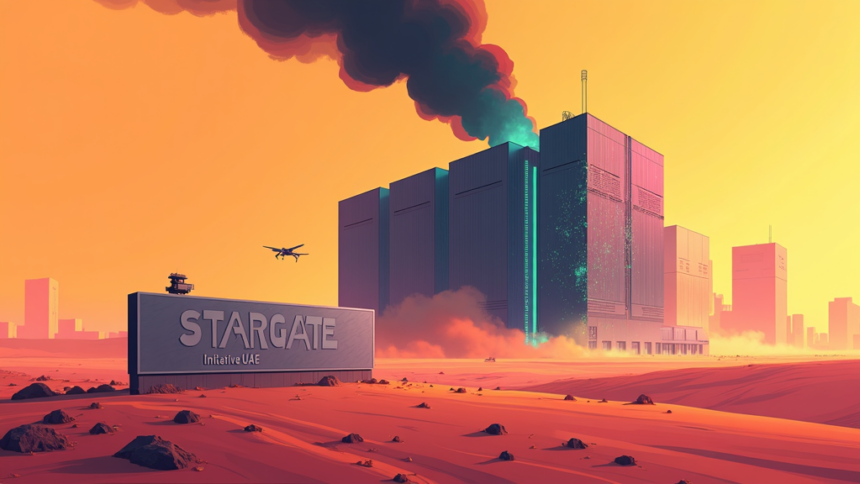
The glossy vision of a trillion dollar AI data center corridor in the Gulf is crumbling under live fire. Pure Data Centre Group, a major London based developer, has frozen all Middle East investments after one of its Abu Dhabi facilities was struck by shrapnel from an Iranian drone attack. The company’s CEO admitted the obvious: nobody is pouring capital into a war zone. The damage is a direct hit on the Stargate initiative, the joint venture between G42, Microsoft, and OpenAI that was supposed to make the UAE the third pole in the US China AI arms race. Now that ambition looks like a mirage.
The problem is not just physical destruction. It is financial. Amazon Web Services took a $150 million hit by waiving customer charges for a month after two of its UAE data centers were damaged and a third in Bahrain suffered a near miss. Existing civil law frameworks place the burden entirely on operators during military conflicts. This is not a bug. It is a feature of a system where tech giants assumed geopolitical risk was someone else’s problem. The era of building massive, centralized AI campuses in volatile regions is over before it really began.
The Target List That Won’t Go Away
Iran’s Revolutionary Guard Corps has been explicit. After a US or Israeli strike hit an Iranian bank’s data center, the Guard published a list of new targets including offices and facilities run by Google, Microsoft, Palantir, IBM, Nvidia, and Oracle. They followed through on April 2, striking an Oracle data center in Dubai. Air defenses intercepted the attack, but shrapnel still hit the building. The message is clear: if you build AI infrastructure for the US military or its allies, your servers are now military assets.
Tech companies are scrambling for solutions, but none are good. Distributing capacity across smaller, widely dispersed facilities would drive up operational costs and defeat the economies of scale that make AI data centers profitable. Defense contractors are suddenly getting calls about anti drone systems for server farms. The entire business model of staking billions on hyperscale campuses in the Gulf requires a level of security that no private company can provide. Pure DC says it still sees a long term opportunity in the Middle East, but that is just talking up the stock. The reality is that the AI industry’s cheapest path to global domination is now blocked by shrapnel and uninsurable war damage.
Source: Arstechnica