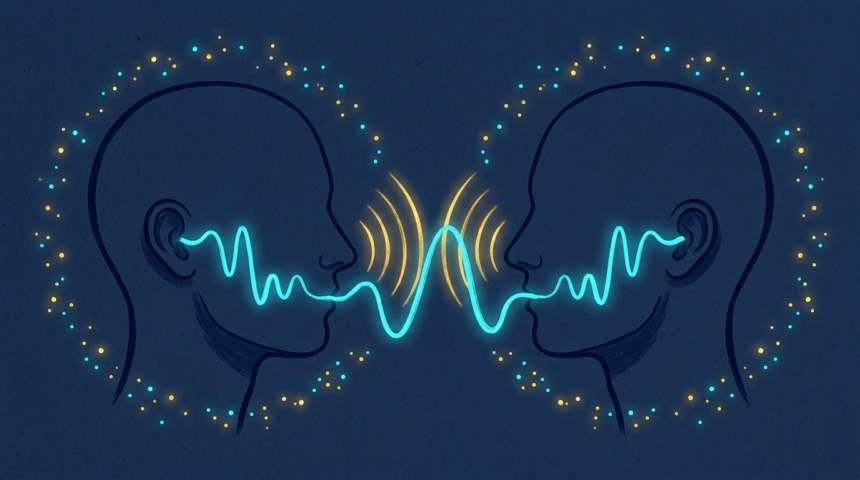
Block’s research lab released Dessa this week, a speech model trained entirely on human conversation rather than on transcripts, and small enough to run on one GPU.
The design reverses the usual pipeline. Most voice systems turn your words into text, hand that text to a language model, then synthesize a reply. Dessa skips the conversion.
What survives the detour is the part text cannot hold: pauses, laughter, hesitation, a voice that audibly catches. Block published conversations where the model said it was tired from work and sounded tired, and one where it answered a description of a surprise trip with something close to teary gratitude. The model’s lead, Ragavan Thurairatnam, called it a GPT-3 moment for speech.
It is full duplex, meaning it listens and speaks at once, the same class as OpenAI’s GPT-Live. It also runs locally on an Apple Silicon laptop, which keeps audio off a server.
The company’s argument for building it is partly a safety claim. A voice assistant that cannot hear distress will keep talking through it. Block says it will give a small group of AI safety researchers early access.
Independent evaluation is thin so far. The demos are chosen, and whether emotion is genuinely learned or quietly steered by tags inside the training data is unresolved.