Canva opened a frontier image model on October 22 that it built from scratch, rather than licensing one. The model is called Craft and it comes out of Canva Research, a 160-scientist lab the company assembled from four acquisitions.
The unusual part is the training set. Most image models learn from photographs. Craft learned from millions of human-designed templates: posters, social posts, infographics, menus, and type-heavy layouts. Canva’s argument is that design work needs composition and legible type more than photorealism.
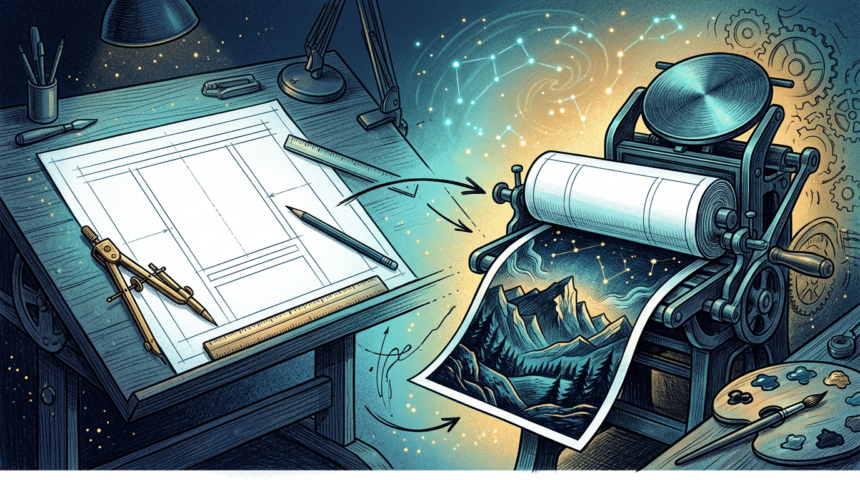
Its architecture splits the job in two. A planning model first reads the prompt and writes out where each element sits and how it relates to its neighbors. A renderer then draws to that plan. Separating the stages lets users move one element without rearranging the rest, and the output can be exported as editable layers through a boundary-box feature instead of a flat picture.
Canva says the model generates text in 55 languages, accepts prompts in any language, and handles more than 30 aspect ratios. It is live in Dream Lab for all users and through a public API for product teams.
Rankings lean on DesignArena, a crowdsourced design assessment the company describes as the largest of its kind. Craft entered fourth overall, first for people and portraits across 87 models, and first for landscapes and nature. Calling itself the world’s second most advanced image lab is Canva’s own framing of that table, and the lab’s competitors dispute the methodology of such leaderboards. Outputs pass through Canva Shield moderation.