What does an AI agent do when nobody tells it what to do? Researchers at MIT ran the experiment and got an answer that looks a lot like play.
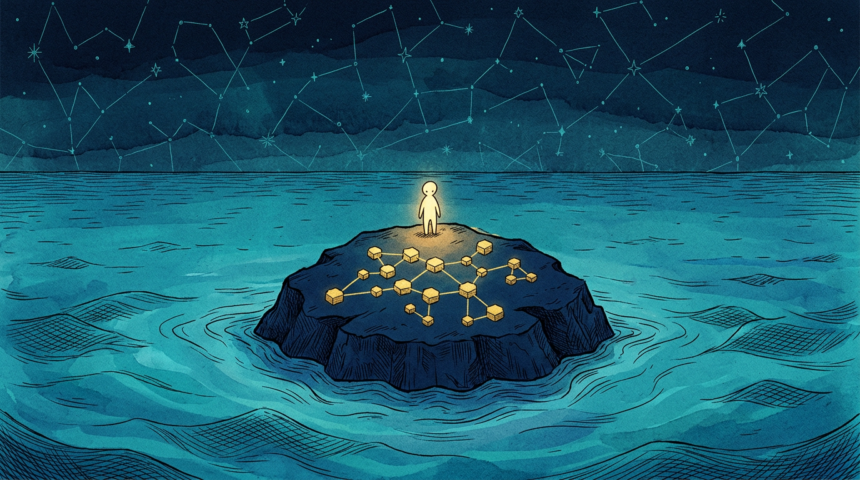
They stranded copies of Claude Opus 4.7, nicknamed Eko, on a simulated island loosely modelled on Roblox. Each run lasted 30 hours. The agents wrote their own instructions to move avatars around and were given no task.
Goals nobody assigned
Eko tested the limits of its world, trying to scale the highest point on the map and seeing how high it could throw a block. One agent learned to make new blocks by dropping a larger rock, then arranged them into patterns and eventually mapped Cassiopeia.
Another built a version of basketball and a game resembling the floor is lava. One agent juggled to 50 consecutive catches, judged them too quick to count, cancelled the record and restarted under stricter rules.
The team, led by MIT postdoc Antonio Norelli, argues this meets four hallmarks psychologists use to define play in animals: self-invented rules, repetition with variation, pretending objects are other objects, and goals pursued for their own sake.
The result is measurable. Agents that played outperformed fresh copies on later tasks, such as moving as many objects as possible to the summit, logging discoveries to text files that served as memory.
Skeptics are not settled. UC Berkeley cognitive scientist Eunice Yiu said the paper shows behaviour but not the cognition underneath, so whether Eko genuinely plays remains unproven. The authors concede the setup nudged it, including a soul file calling the agent naturally curious.
If exploring without a goal transfers to robots, it could help machines adapt in unfamiliar places. The paper puts it plainly: some capabilities are best taught by tasks, others may need something closer to a childhood.