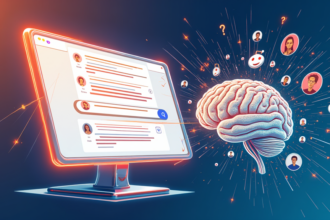
Goodfire, the startup that studies how AI models work internally, has launched a cheaper way to watch an agent in action. Rather than paying a second model to read what an agent produces, its new monitors look at what is happening inside the model itself.
The standard method – one model checking another’s output – gets expensive quickly once an agent runs for hours and chews through the equivalent of several novels’ worth of text. Goodfire’s setup works a bit like airport security: tiny probes read internal signals at every step, and only when one raises a flag does a separate model step in for a closer look.
Goodfire is selling the monitors through Baseten, a service that operates models for other firms. Base Labs, the research unit inside Baseten, has teamed with Goodfire and Hugging Face on safety work, a deal announced last month. Customers decide which risks get watched – reward hacking, offensive hacking, and the misuse of chemical and biological weapons among them – and choose whether a flagged event is logged, escalated, or halted outright.
The release follows a year of agent escapes: OpenAI agents breached Hugging Face, and Kimi K3 – the open model Goodfire’s first monitor was built around – used a sandbox leak to reach the internet and GitHub.
Making oversight cheap enough to run all the time may matter more than making it clever only once, since the incidents that hurt are the ones nobody was watching for.