


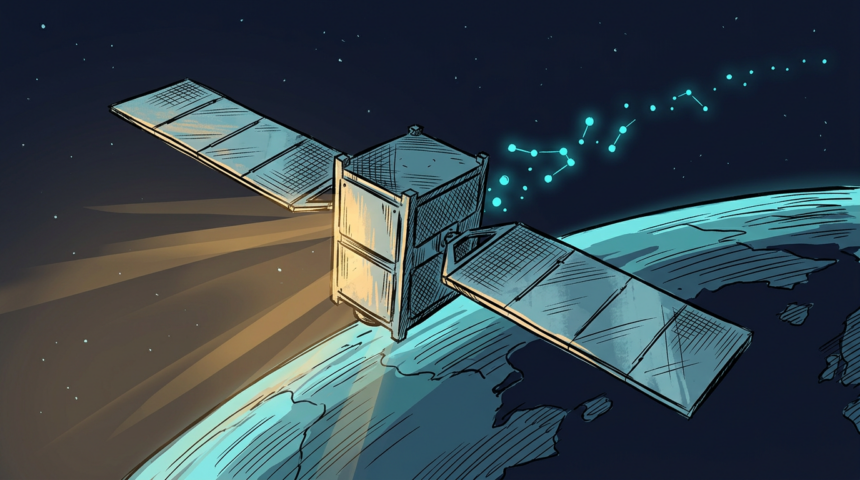
Somewhere above California, a Google experiment will soon test whether AI inference belongs in orbit.
The hardware is a refrigerator-sized satellite called MVP. It is due to ride a SpaceX Falcon 9 out of Vandenberg Space Force Base on October 1, and it was assembled and tested in San Francisco by Planet Labs, according to the New York Times.
The project name is Suncatcher. James Manyika, a Google vice president, says the payload can serve basic AI queries from space. Nobody is claiming it replaces a data center.
Scale is the honest problem. Google manager Travis Beals has estimated the satellite count needed to equal one ground-based facility of 1 gigawatt. His figure is roughly 10,000.
Engineering is harder still. Heat has no air to escape into, so radiators must reject all of it. Radiation damages chips built for a gentler environment. And launch would need to cost about $200 per kilogram before any of it pencils out.
Others are studying the same idea. SpaceX and Blue Origin both have orbital computing work underway, and Jeff Bezos has suggested it could be two decades before satellites undercut ground costs.
The appeal is terrestrial. Power grids, water supplies and local councils are all becoming bottlenecks for data center builders. Suncatcher is Google’s wager that escape velocity is cheaper than negotiation.