

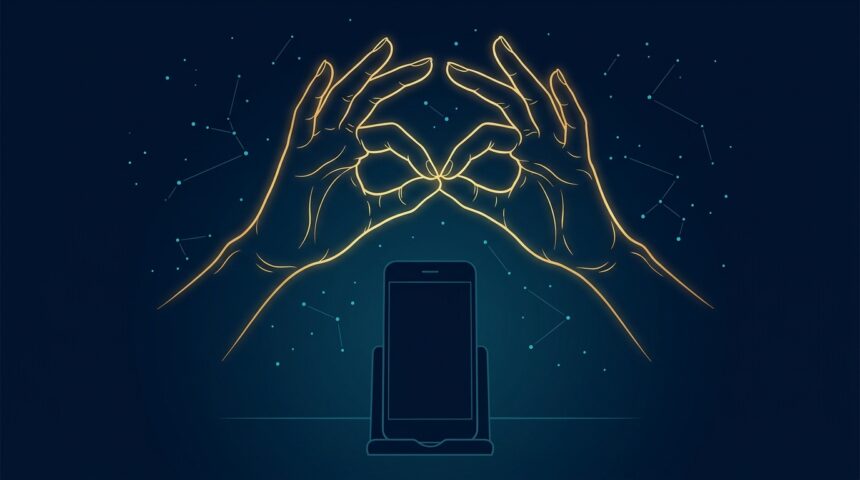
Google has shipped the first sign language AI inside consumer products, with DeepMind’s SL2T model powering sign-to-text dictation in Gboard and Live Transcribe on the Pixel 11.
The model handles the usual typing jobs in sign form: searches, message drafts, and Gemini queries all begin with a gesture at the camera, using American Sign Language to English from the August 12 launch. The same input works inside Live Transcribe, where a signed reply replaces typed text in a running conversation. DeepMind’s testers called ASL signing faster, more natural, and more enjoyable than English typing, and rollouts beyond the Pixel 11 are planned.
SL2T is what DeepMind calls a massively multilingual model, trained on more than 100,000 hours of signing across over 50 sign languages, about a quarter of it ASL. The lab notes that more than 200 sign languages exist, used by an estimated 70 million Deaf and hard of hearing people, and says joint training beat single-language systems in its experiments.
The privacy design keeps raw video on-device: MediaPipe Holistic extracts 130 key points across face, body, and hands, and only the coordinate stream travels for translation, with the camera feed discarded. SL2T also skips the gloss annotations older systems used, converting pose data straight into English text.
On FLEURS-ASL, a benchmark for complex ASL-to-English translation, Google reports a zero-shot score of 70 BLEURT, ahead of previously published results.