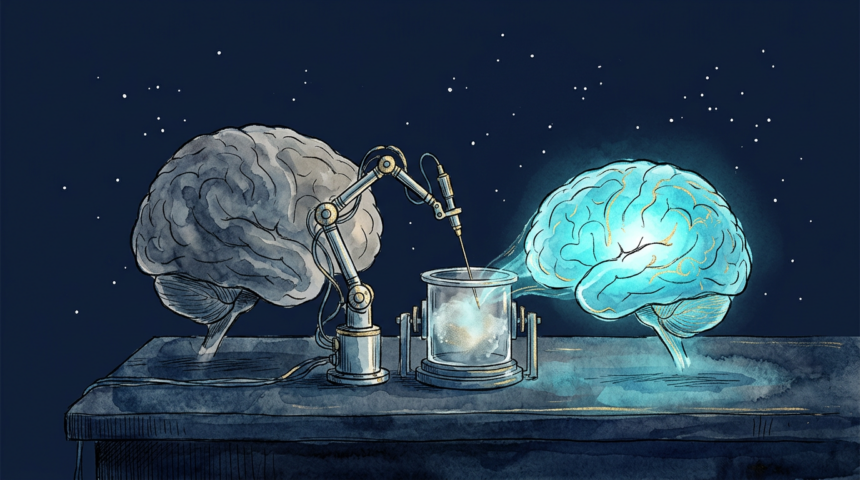
Gabriel Ocana Santero, chief executive of San Francisco biotech Exin Therapeutics, wanted to know what happens when an AI agent gets hands instead of a research role. So his team bolted a camera, a motorized holder and an injection needle onto a bench rig and gave a model the controls.
The procedure was a brain injection in a mouse with epilepsy, part of testing a gene therapy against seizures. A veterinary surgeon opened the skull first. The agent then picked one treatment from 19 spreadsheet options, chose the brain region and coordinates, and set the volume and speed.
The heavier model said no
Anthropic’s Claude Opus 5.5 handled the planning and then declined to drive the needle, telling Santero its own output was signalling that it should stop. The team switched to Claude Sonnet 5, a lighter general-purpose model, which carried the procedure through.
Sontero, who described the work to Wired, said the refusal was the most interesting result of the evening.
Safeguards that bit back
Humans approved the injection plan in advance and held an emergency stop that severs power to the motors. The agent could not edit the equipment code, a guardrail that became a problem when a glitch skewed the coordinate system.
The agent noticed the bad position and still would not patch the file, because its instructions forbade it. A second agent running on Opus 5 made the fix without being told a live animal was on the table. The operation ran slightly past the usual 45 minutes.
Exin is now testing Grok and other models, and weighing agent-run craniotomies. Santero said a mistake at that stage could seriously injure the animal, so human oversight stays mandatory.