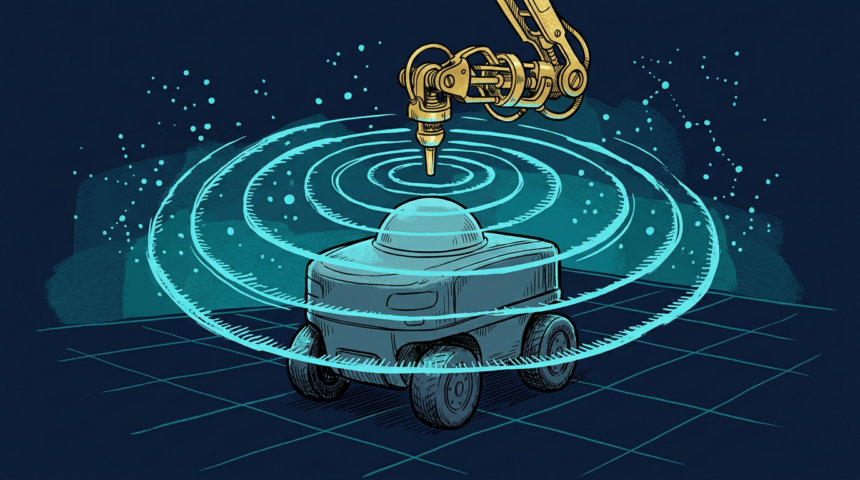
Laplace Intelligence is building automated red teaming for robots and physical AI, betting that software which deliberately breaks a system is the fastest route to making it safe.
The Ann Arbor company argues that AI agents moving off screens and into machines raise the cost of failure sharply. A model that misroutes a request online is inconvenient. A model that misreads a sensor on a delivery robot can injure someone.
Chief executive Howie Sun pointed to the recent OpenAI-Hugging Face incident as evidence that agents behave unpredictably, and asked what the equivalent failure looks like when the agent controls hardware.
Laplace’s pitch is that human testers cannot enumerate the long tail of physical edge cases quickly enough. It runs automated adversarial testing against robotics and autonomy stacks, surfacing failures before deployment.
The company is competing in Startup Battlefield at TechCrunch Disrupt, one of twenty startups in the pitch competition.
Its longer play is a shared evidence base that insurers and regulators could use. That ambition runs into a hard problem: proving a negative. Demonstrating that a system survived a test suite is not the same as showing it is safe in a warehouse full of people.
Regulators have started asking for exactly that kind of evidence, and no standard method exists yet for producing it.