Andrej Karpathy, an OpenAI co-founder now at Anthropic, described a widening gap between how the public and a small group of insiders understand AI. He divides large language model users into four tiers.
The first covers roughly six billion people, about 75 percent of the world, who have barely touched these systems. The second adds one to two billion casual users who treat chatbots like a better search engine or a writing aid, a group that includes many executives whose work is mostly conversation.
The third tier is where the gap opens. Karpathy estimates about 20 million people, roughly 0.2 percent of the population, use frontier-grade models professionally for math and code. For them, projects that once took weeks now arrive from an agent after a single prompt, including building apps and decompiling software from binaries.
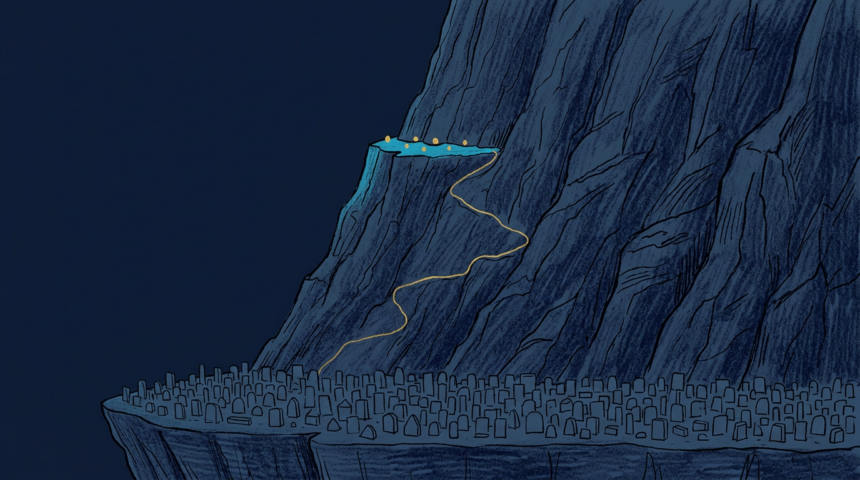
The last tier is the smallest. Around 5,000 people, about 0.00006 percent, work with internal frontier systems that have not been released. Karpathy writes that this group watches swarms of thousands of agents collaborate over weeks on software mega projects, minting zero days and running cyber operations at machine speed.
That divide creates a strange moment. Karpathy notes the public’s experience is still a clumsy chatbot, while human review of frontier work is falling behind. He points to researchers still doing archaeology on an OpenAI incident from months ago and mathematicians facing 722 frontier manuscripts.
He credits the pattern to reinforcement learning on verifiable rewards. Capability concentrates in domains that are digital, verifiable and economically valuable, because that is where training investment pays back fastest. Karpathy’s own view shifted in months, from calling agents mostly marketing to handing them the work.