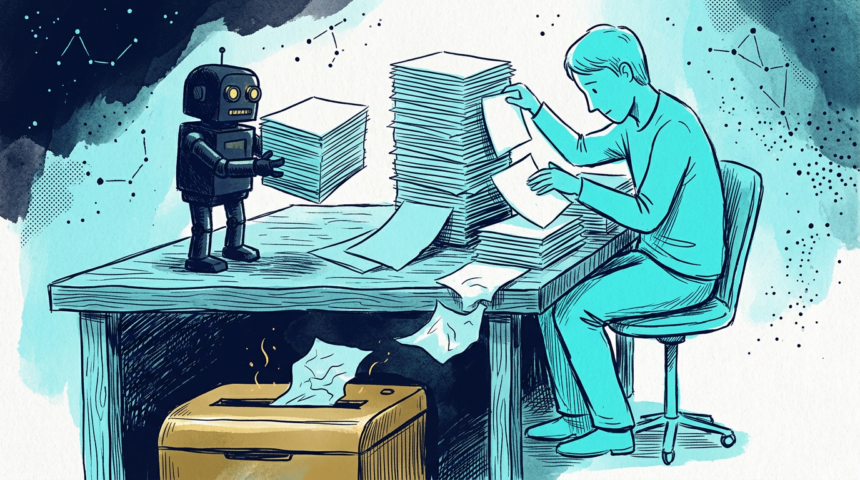
OpenAI wanted people to grade its chatbot with human judgment. Some of them let a chatbot do it instead, and lost their work for it.
The contractors were hired to read ChatGPT prompts and improve the responses, a role meant to inject a human signal into training. According to 404 Media, the company discovered many were passing the job to AI tools and dismissed a batch of them. It has not said how many.
The rules were explicit. Contract terms bar AI detection tools such as GPTZero, calling them unreliable, and go on to forbid AI of any kind, Grammarly and translation software included, for writing feedback or comments.
Why the strictness? OpenAI is guarding against model collapse, the failure mode where systems learn from text generated by earlier models and get worse rather than better. Human feedback is one of the main defenses, which makes reviewers who outsource their judgment a threat to the data pipeline itself.
One contractor told 404 Media the shortcut was everywhere, and called it the fastest way to be removed from the program. “In a group of thousands, there are tons that have been caught,” the person said.
OpenAI declined to comment on the report. The episode captures an awkward bind for the industry as AI spreads through knowledge work: the labels labs rely on are only as human as the people producing them.